Overview
Reactive Potential
Non-reactive. Neutral.
Forms of Glass
Sheet Glass (-0030, -0050), Frit (-0001, -0002, -0003, -0008), Rod (-0576), Stringer (-0107, -0272) and Billet (-0065)
Detailed Information
About 001820 Sheet Glass
Cold Characteristics
Consistent color.
Working Notes
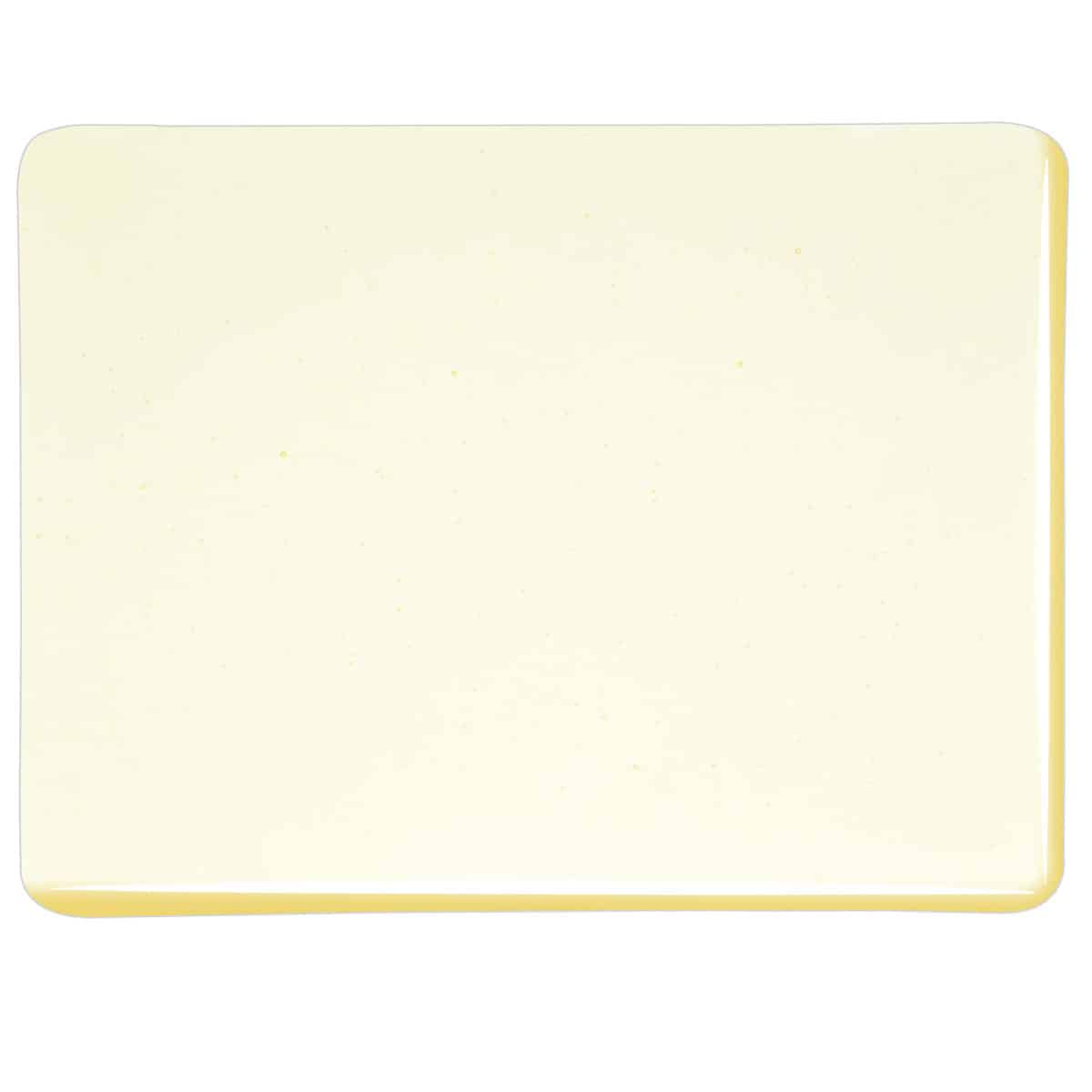
Stable. No color shift. Fusible / Bullseye-compatible.
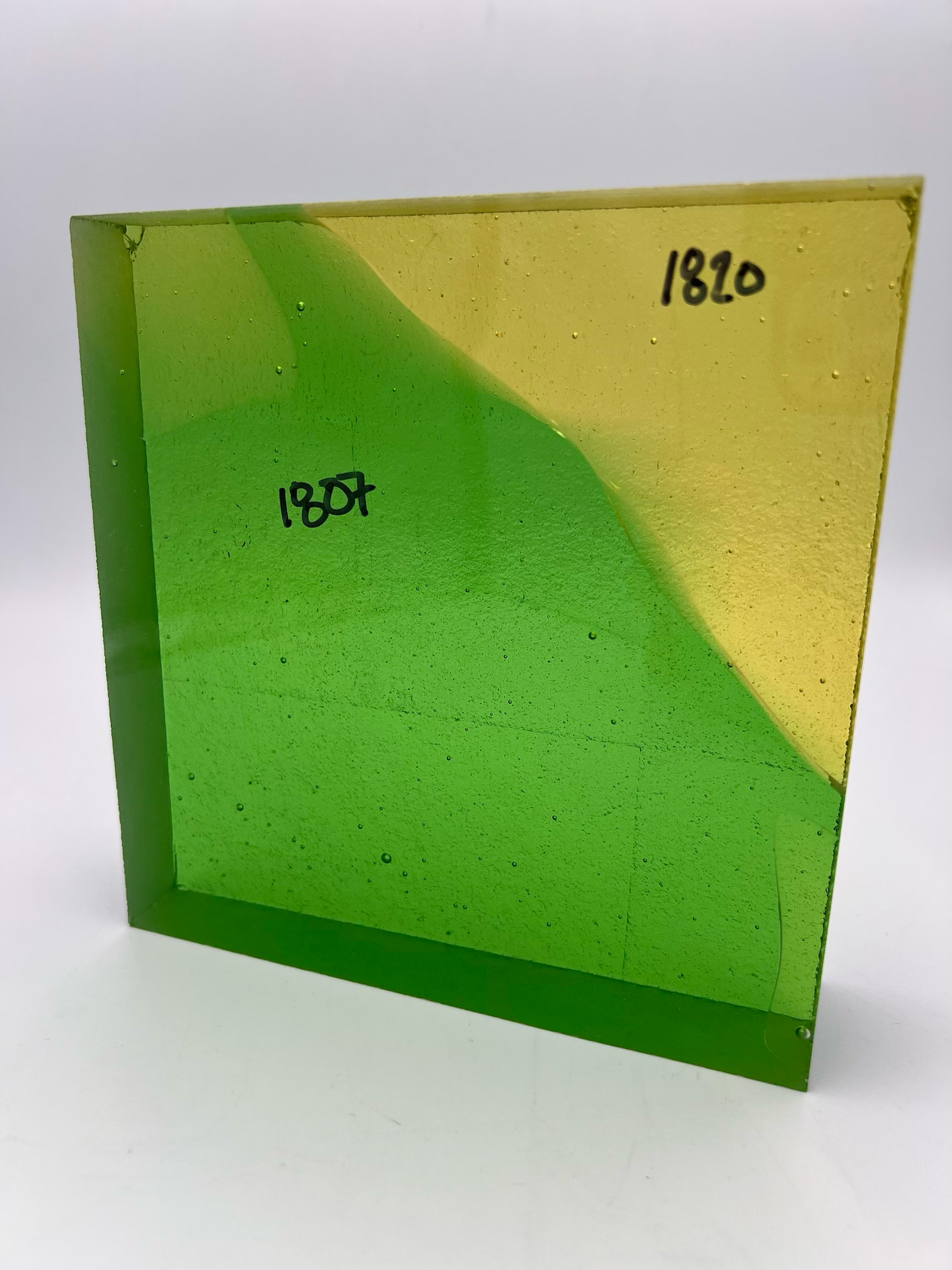
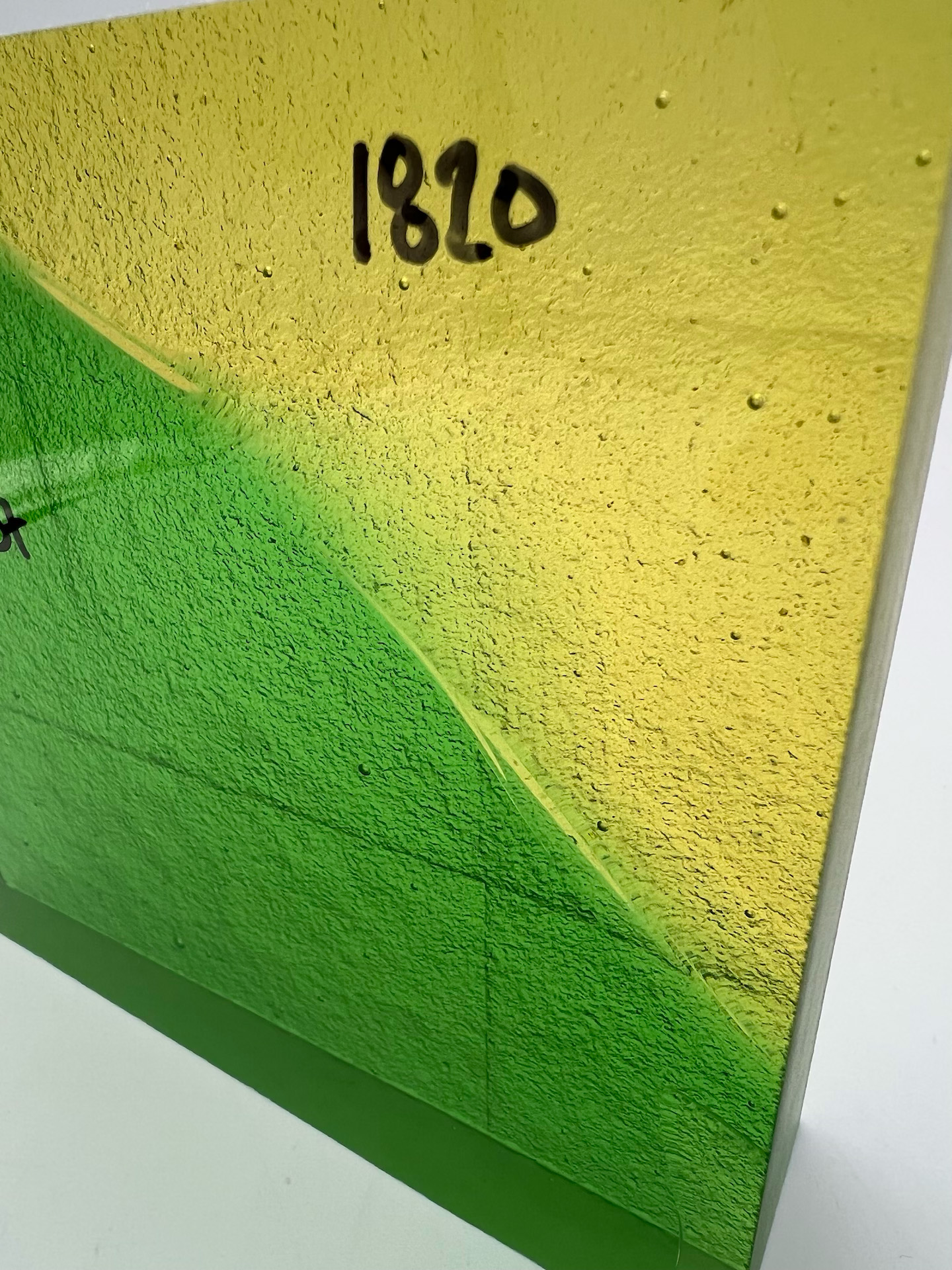
Pale Yellow Tint Fracture Illusion: 1820 develops highlights where it interfaces with other glasses. At first glance, these can be mistaken for cracks. This phenomenon, however, is purely optical.
About 001820 Frit
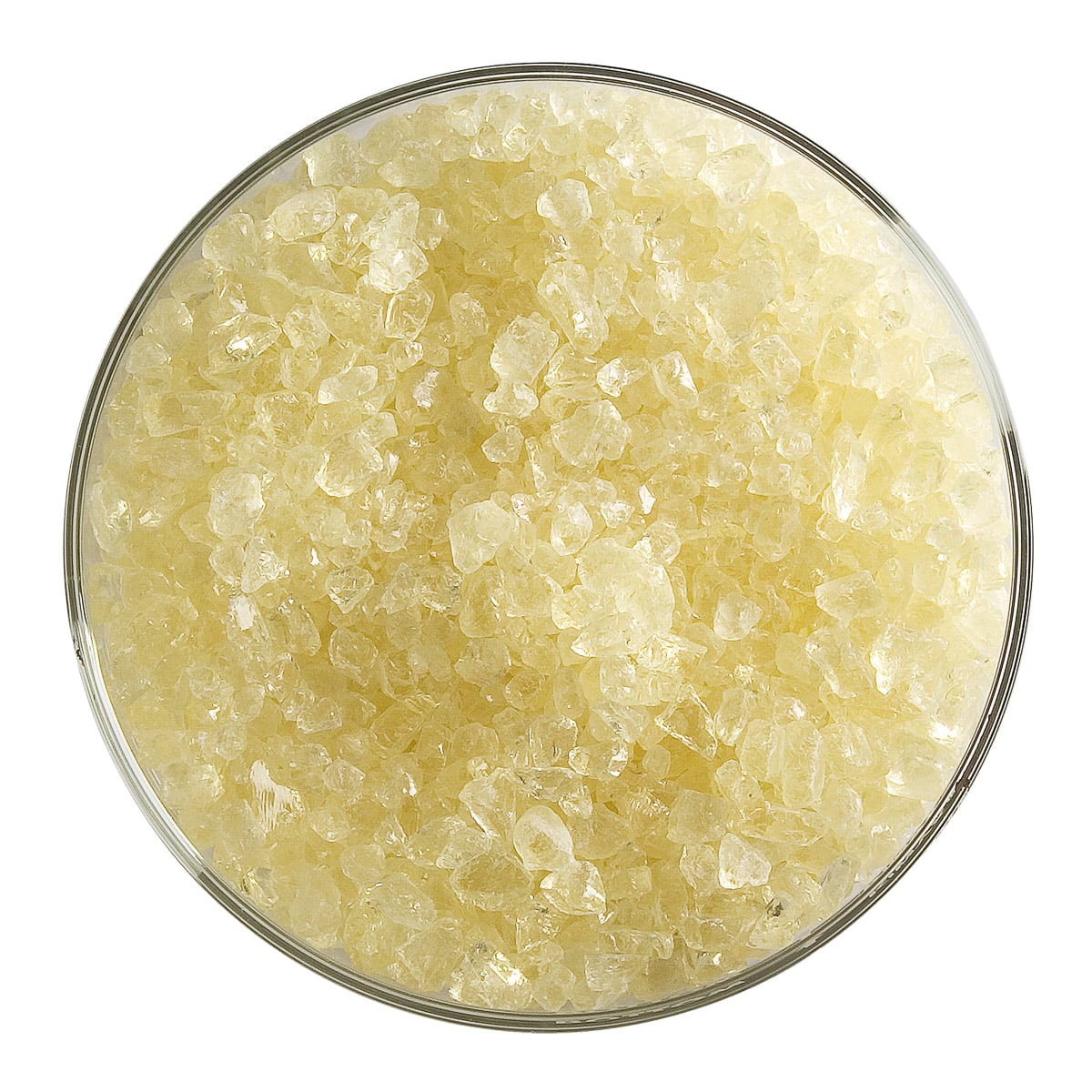
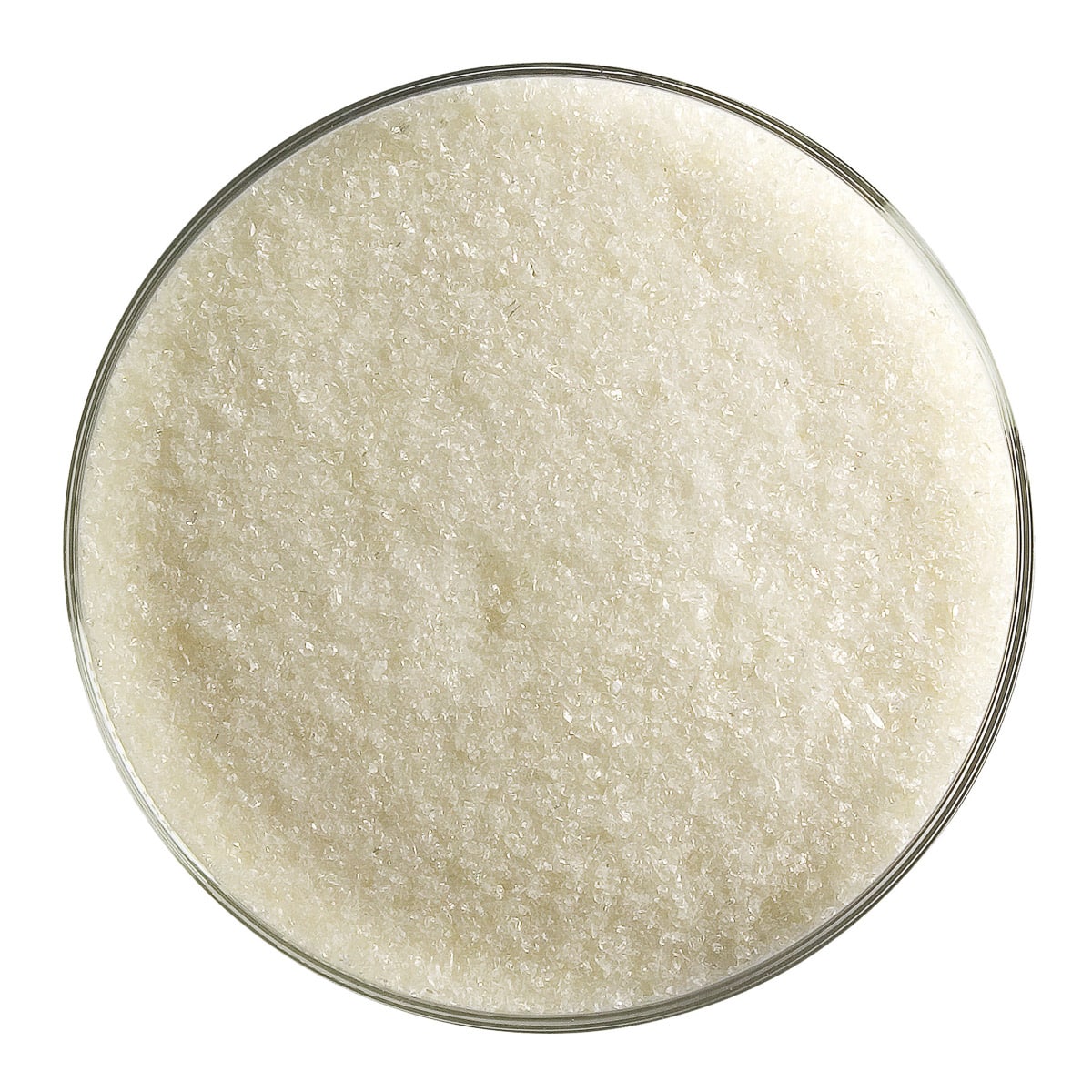
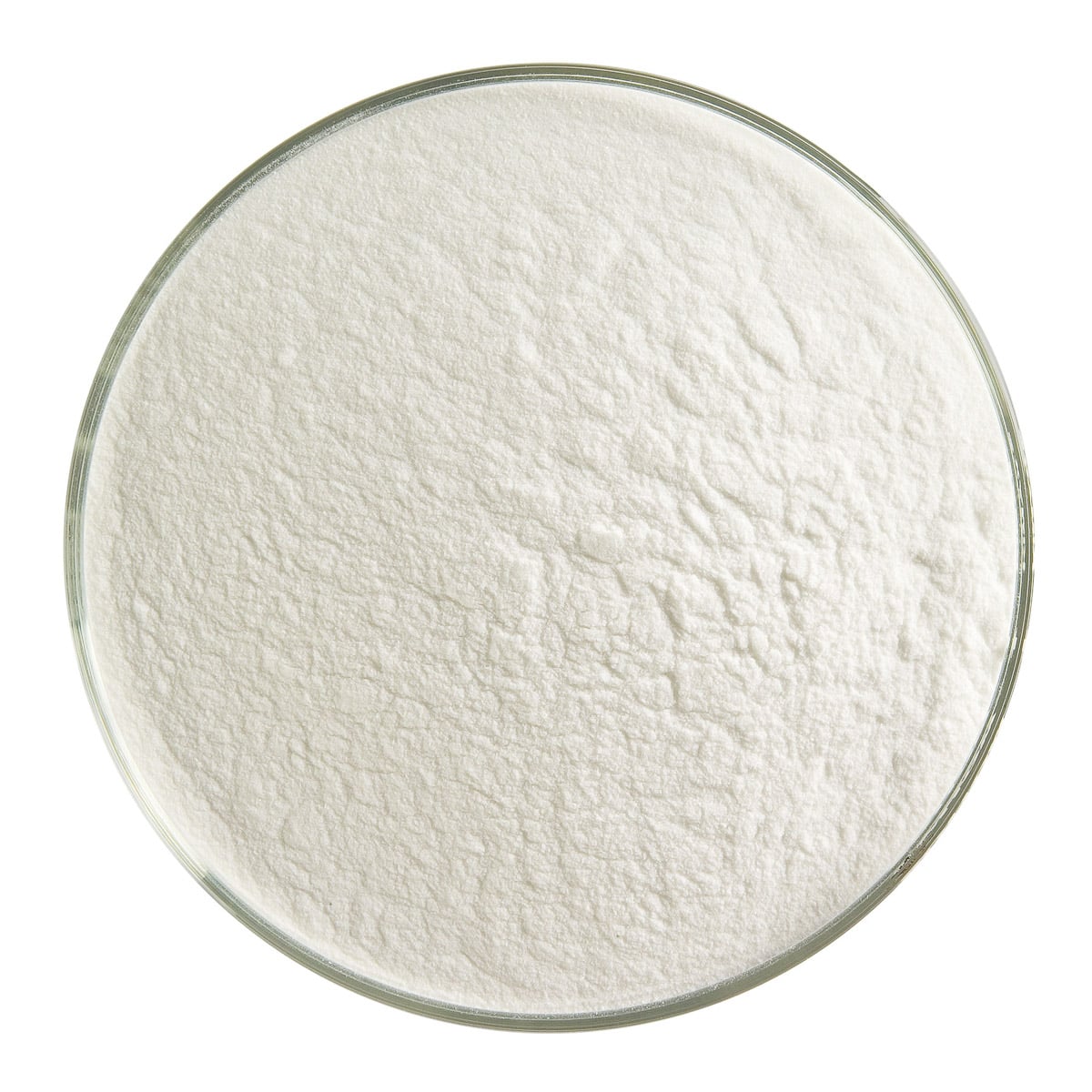
See sheet glass notes on this style.
About 001820 Rod
Cold Characteristics
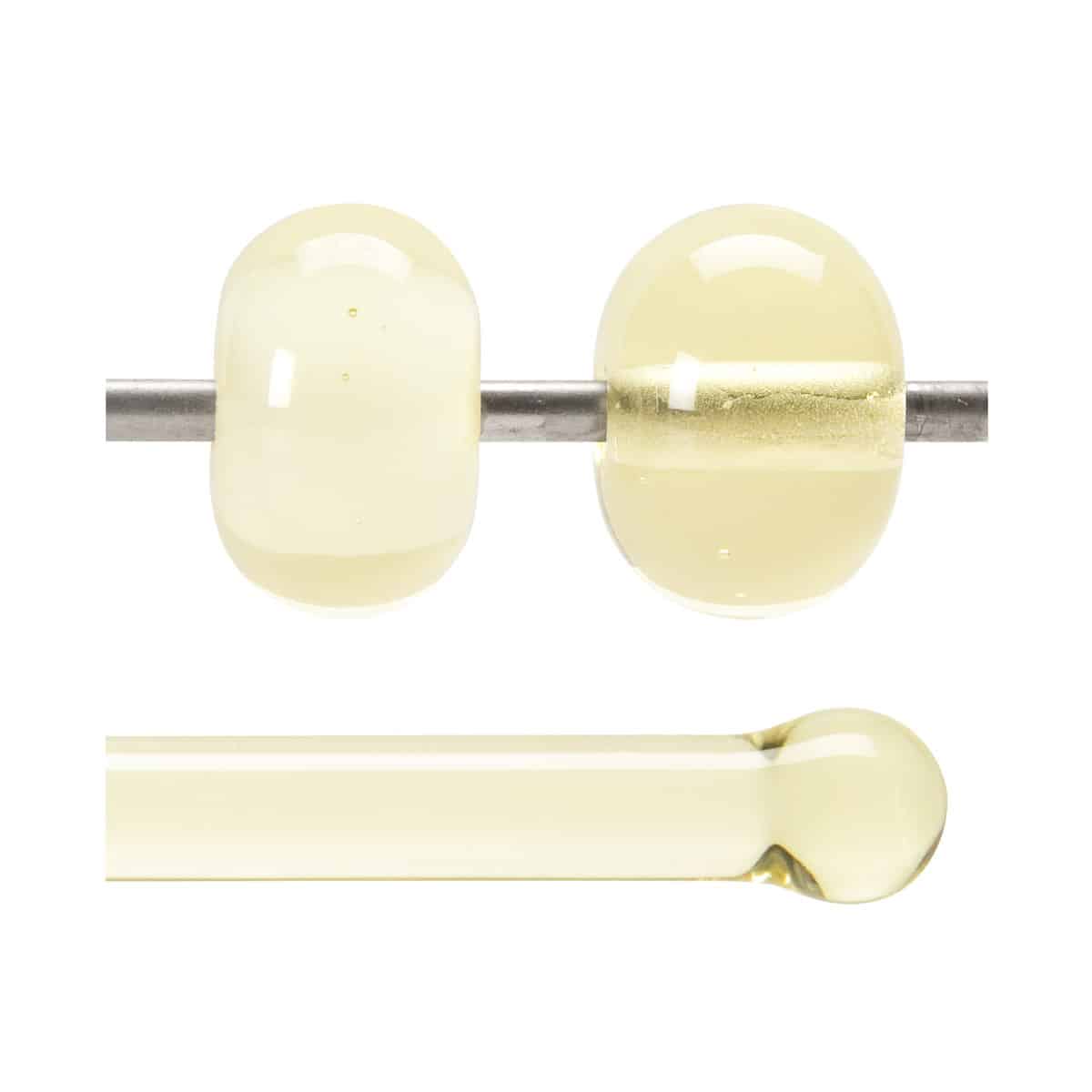
Light coloration, transparent yellow. Differentiate from Light Amber Transparent (001437-0576), Yellow Transparent (001120-0576), and Orange Transparent (001125-0576) by looking for a bright yellow color in transmission when viewed from the end.
Working Notes
Torch: A stable tint that is not prone to reduction in a neutral flame.
Kiln: Working properties and kilnformed characteristics are consistent with sheet glass. See sheet glass notes for this style.
About 001820 Stringer
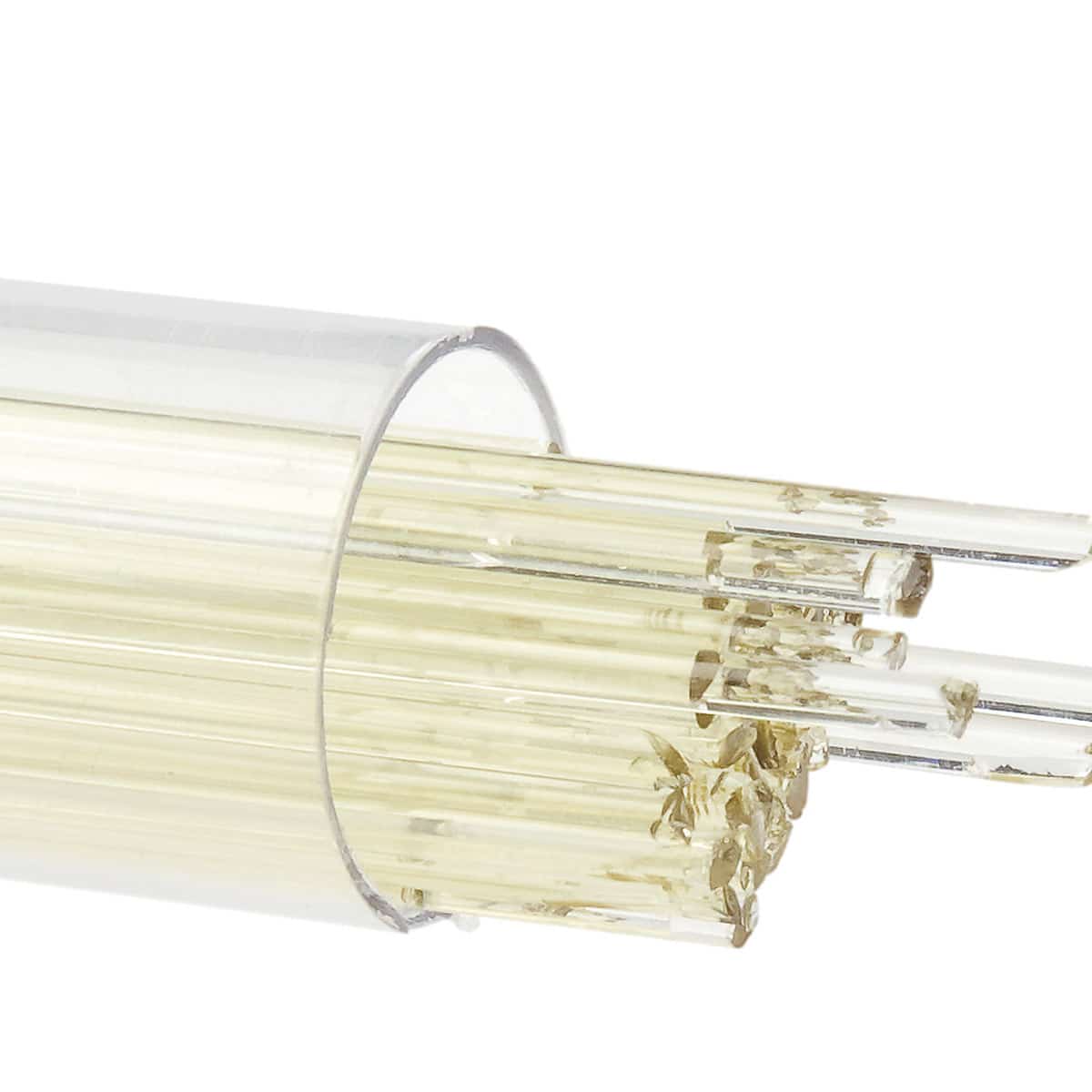
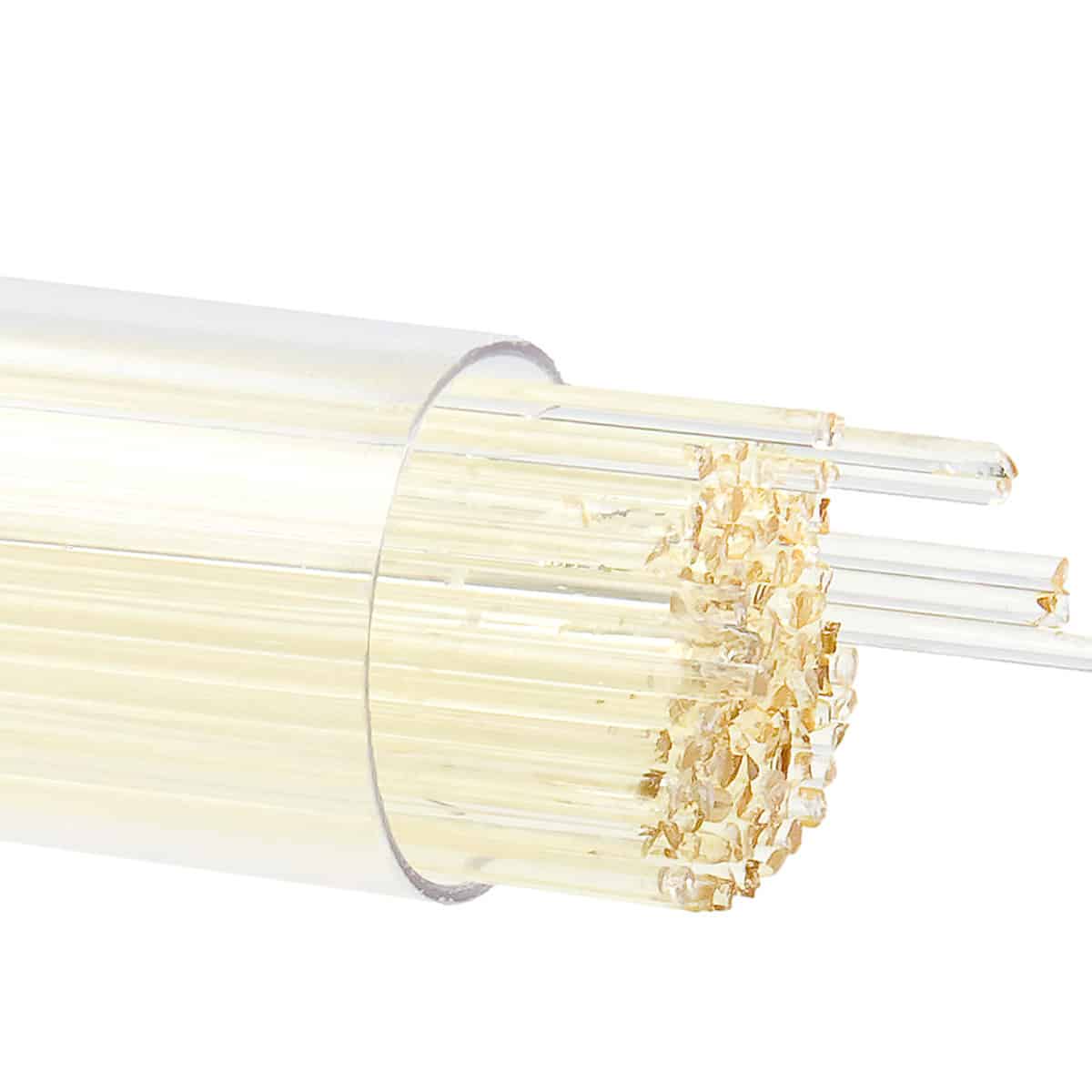
See sheet glass notes on this style.
About 001820 Billet
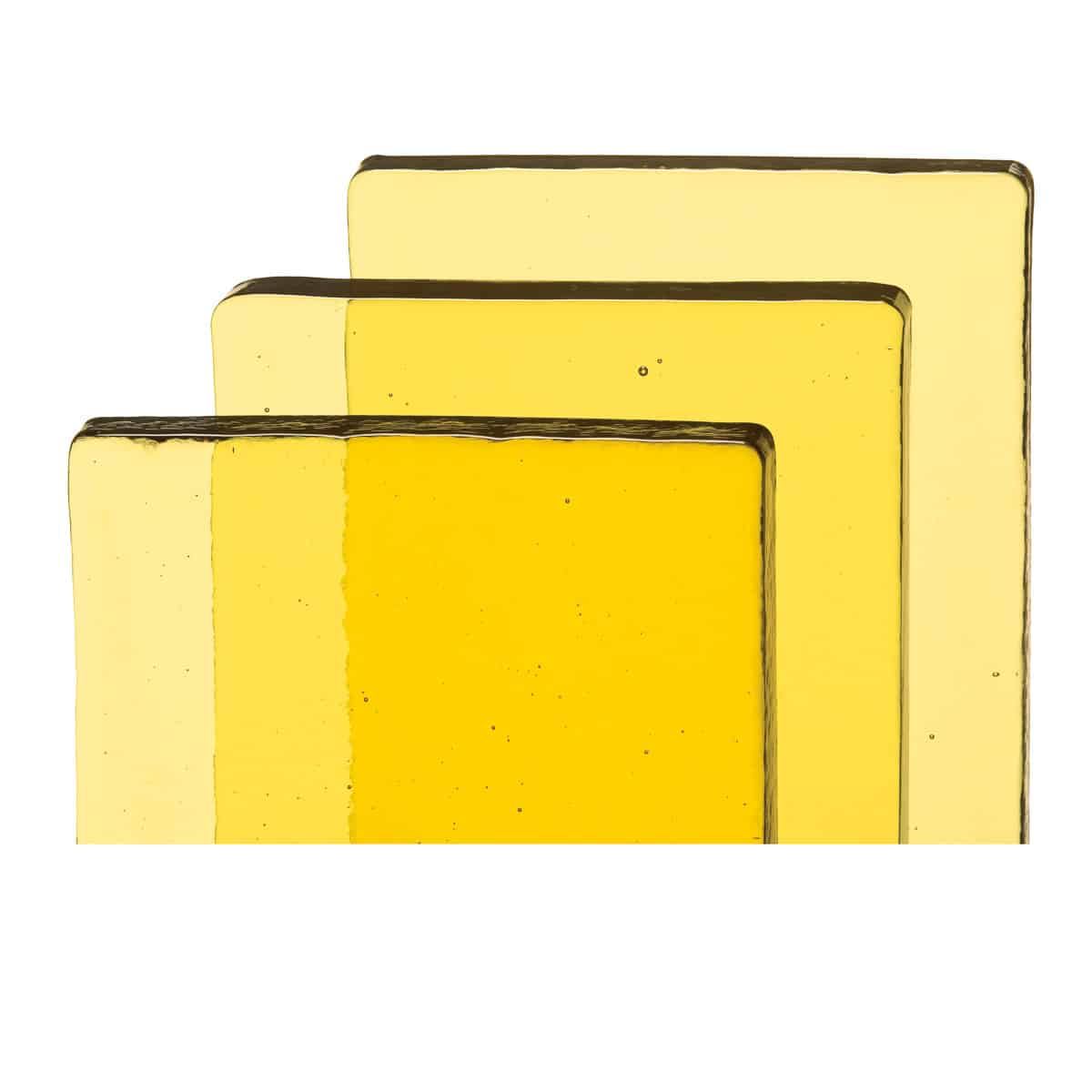
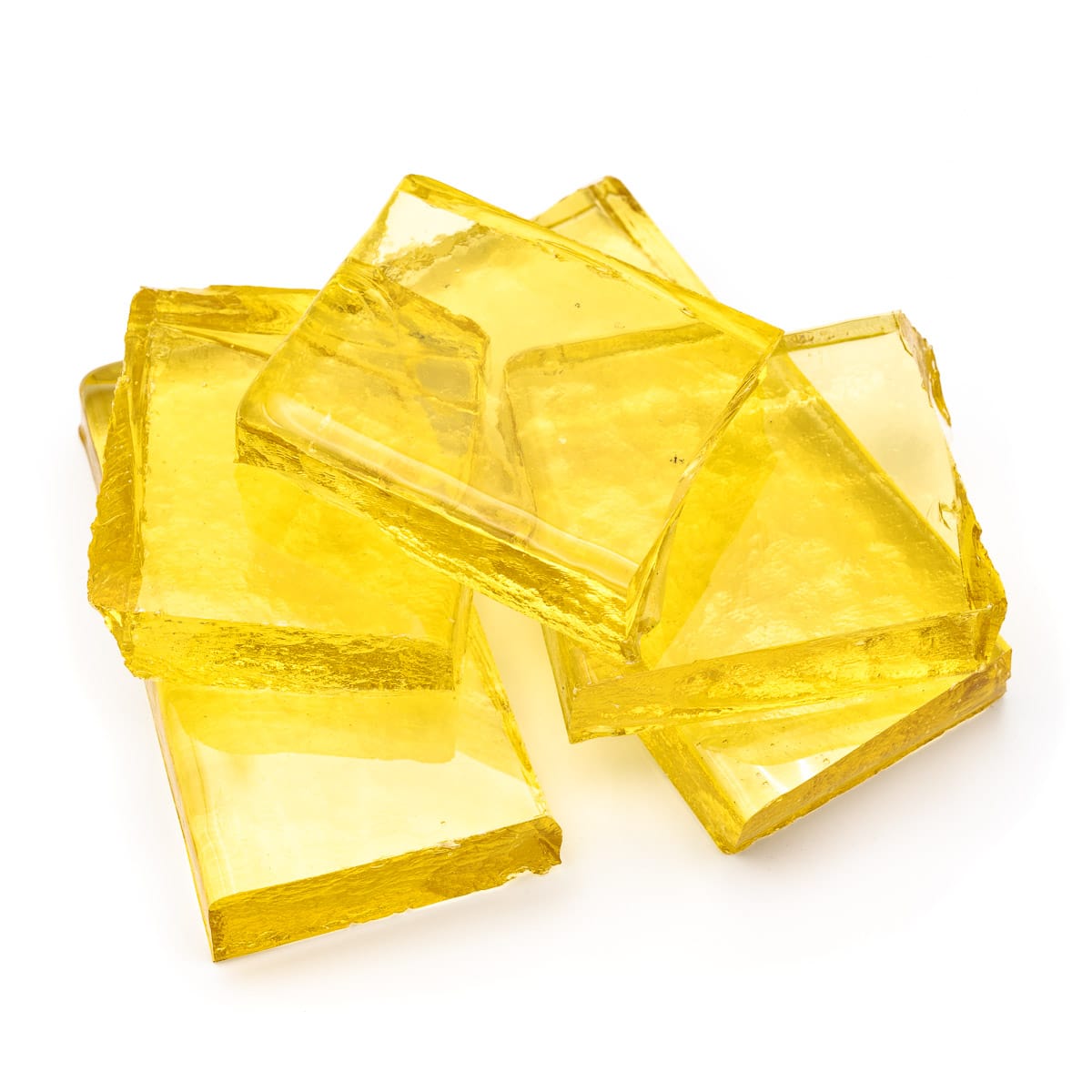
See sheet glass notes on this style.
Pale Yellow Tint Fracture Illusion: 1820 develops highlights where it interfaces with other glasses. At first glance, these can be mistaken for cracks. This phenomenon, however, is purely optical.