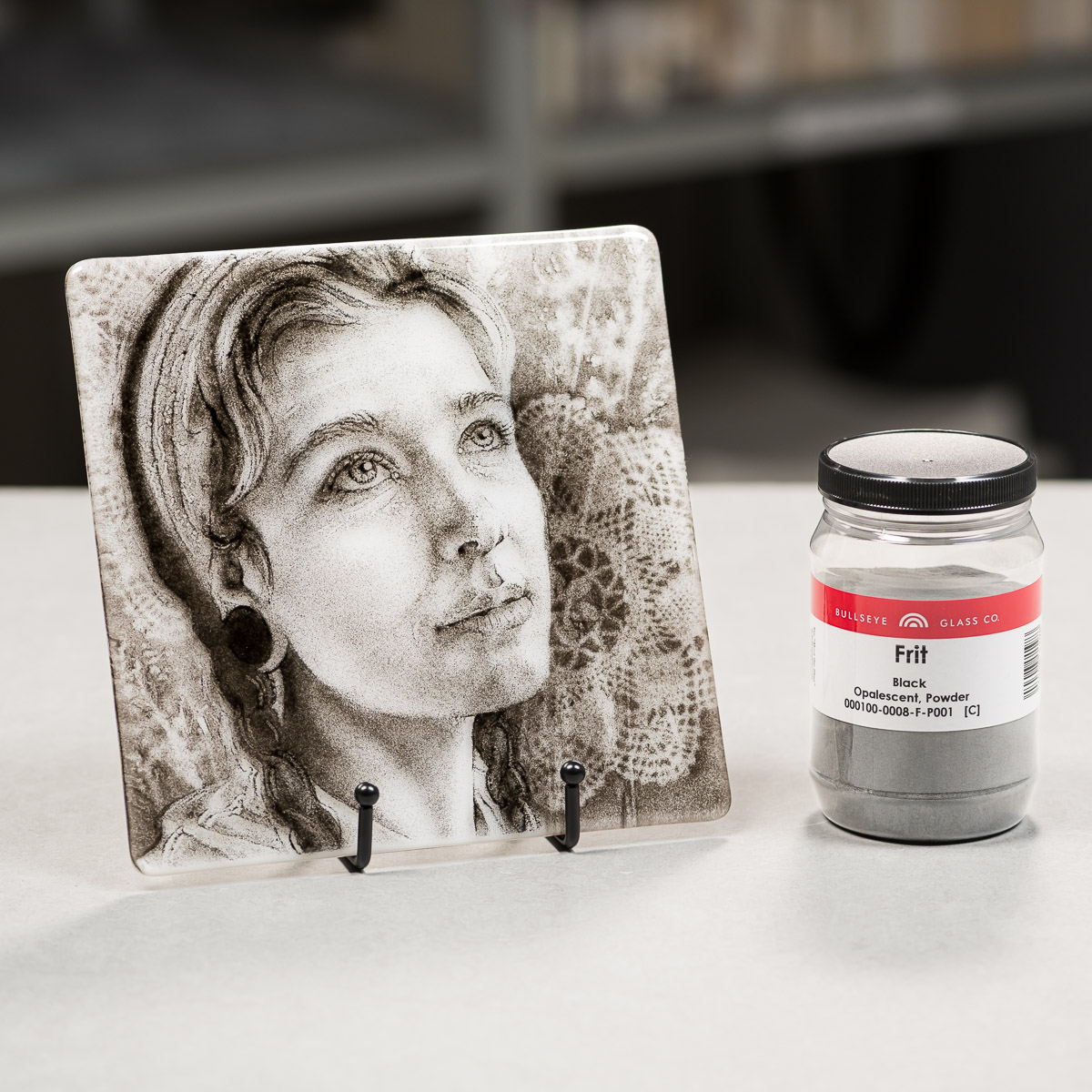
If you want to understand how an artist with an illustration background and a sponsorship from Copic markers became one of the only people in the world doing what she does with Bullseye powder, it doesn’t hurt to start with her last name.
On the national drag racing circuit, the name Head is tough to miss. You’ll spot it printed on everything from cars to helmets to lewd t-shirts. That’s because for the past forty years, Jim—a driver, engineer, team owner, hall-of-famer, and Suzanne’s dad—has been one of the sport’s biggest icons.
“My childhood toggled between some wild contrasts,” Suzanne explains. “We lived in a rural suburb of Columbus Ohio. Long skirts, high collars, a strict Christian school. Girls in typing class and home ec. Boys in—I don’t know—boy classes. Animals, hunting, the machine shop. But when we weren’t on the farm, we were living out of a tour bus. Rowdy crowds. Loud racecars. Girls in bikinis auctioning off Harleys. Me in the back of the bus trying to finish my homework.”
The dramatic contrast between those colorful worlds inspired Suzanne’s imagination, eventually leading her to study illustration at Savannah College of Art and Design. Her early ambition? To become a rock-and-roll illustrator who maybe did tattoos and murals on the side. “It was the coolest thing 18-year-old me could think of,” she grins. “But I was dating my high school sweetheart at the time and desperately wanted back to Ohio, so I left SCAD and enrolled at Cleveland Institute of Art.”
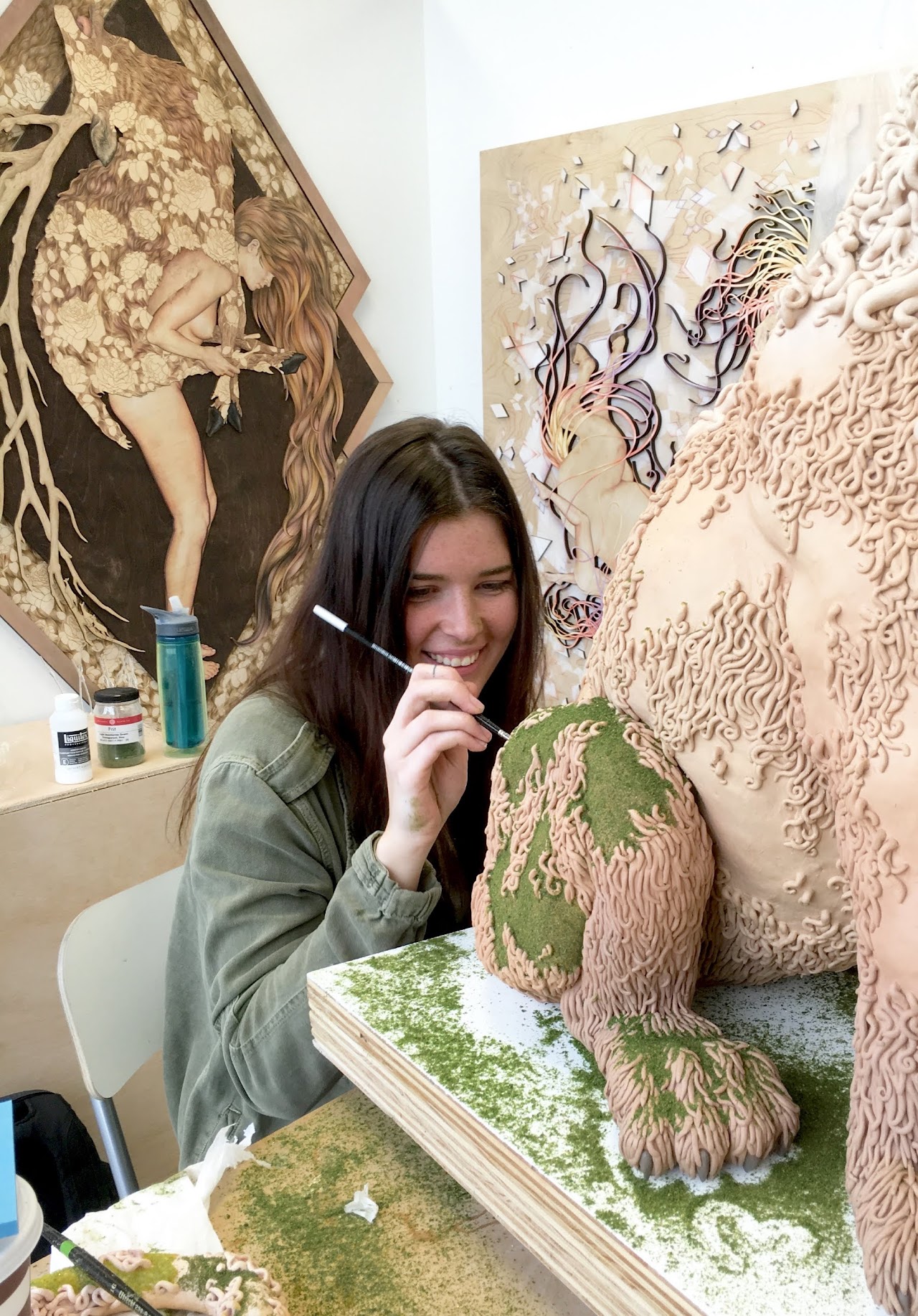
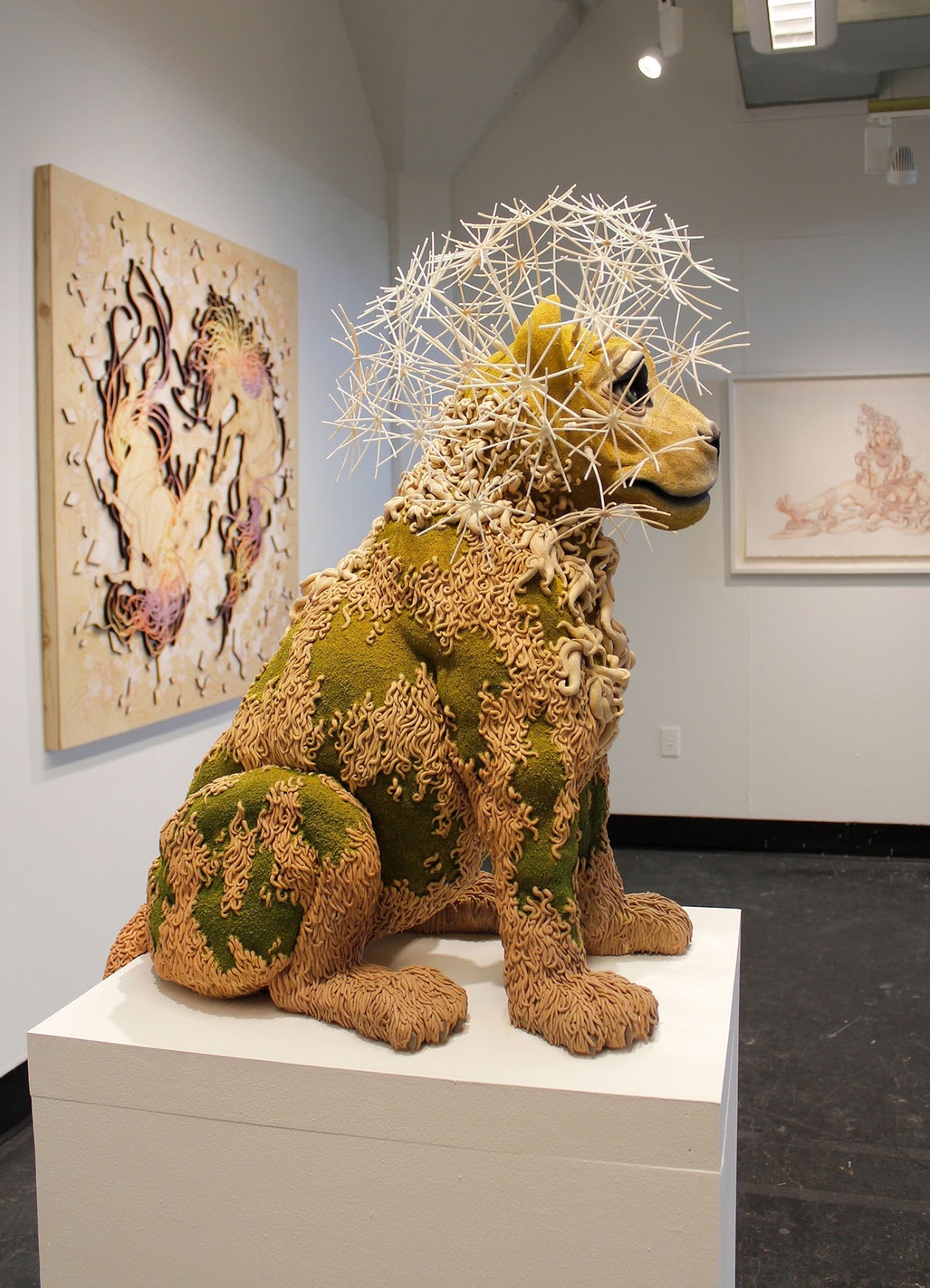
At CIA, professors quickly called out Suzanne’s habit of making massive sculptural pieces. Illustrators, they told her, tended to work in 2-D. She ignored them. “Making big stuff was just cool,” she says with a shrug. That persistent impertinence is what led her to glass. “I never took a glass class,” she says. “I was making a four-foot ceramic lion and wanted to give it a dandelion seed head but didn’t know how. A friend pointed me toward flameworking.” She found the chair of the glass department and asked him to teach her how to make dandelions. He did.
What began with a few clear stringers stuck into a lion’s head grew into an organic relationship with glass. When Suzanne first stepped into a hot shop, it was more than familiar. The heat, the smells of metal and oil, the loud clanks and music. It was like an artsy version of where her dad worked on his cars. “I wasn’t used to the contemporary art world,” she admits. “But the hot shop? That felt like home.”
A professor, Mark Petrovic, eventually gave Suzanne a stash of Bullseye powders to try out. She immediately saw them not as pigment, but as palette. “It was the Copic markers again. Transparent layers, numeric codes, overlapping hues—it just made sense.” She spent months testing mixtures, building a tile library of hand-weighed powder ratios, treating every new blend like a color swatch. “I might have nerded out pretty hard,” she admits with a laugh.
After that, following a move to Seattle, Suzanne found herself surrounded by glassblowers, and fabricating work for artists like Nancy Callan. In order to accommodate a range of fabrication projects, she transformed her guest bathroom into a screenprinting shop, and built a spray booth for airbrushing enamels. Before long, however, Suzanne had become known as “the one kiln person in a room of blowers.”
“I’ve always loved learning how things work. But I don’t get excited about a material if I’ve seen someone else do exactly what I want to do with it.” That drive to explore uncharted territory made kilnforming a perfect fit. “At first, my work didn’t even look like glass. I made it matte. I didn’t like shiny things. If you put light on it, it looked terrible. I wanted it on a white wall, like a painting.”
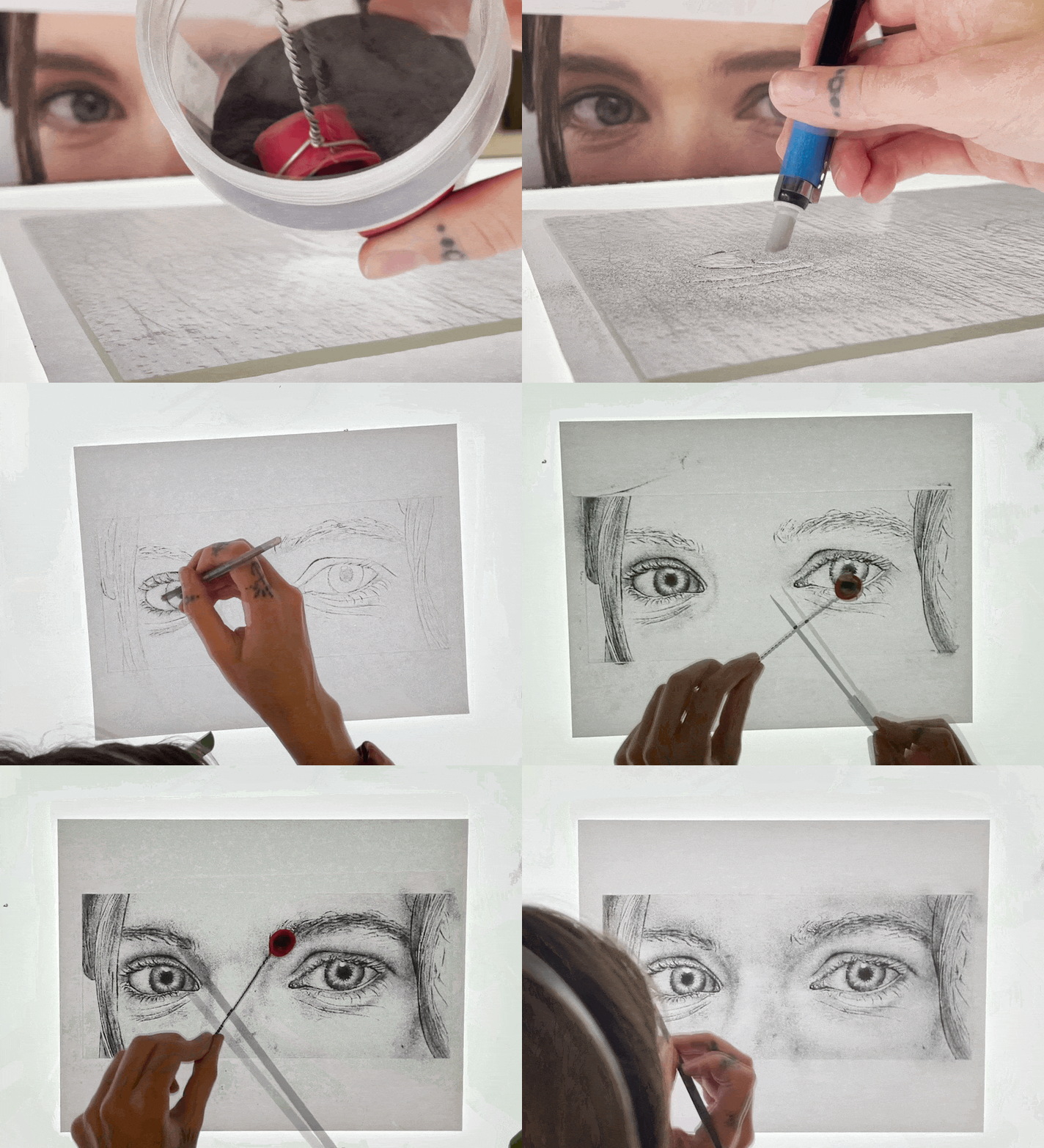
Her experiments quickly evolved into something no one else was doing—drawing in extreme detail with Bullseye powder using tools she built herself because other sifters on the market weren’t precise enough. “I sift small amounts of powder onto sheet glass with tiny sifters. Then, I ‘draw’ with the powder by pushing it around using little paint brushes and rubber nibs. I then fire the drawing in a kiln; and over multiple firings, build up layers of color and detail.”
While Suzanne was developing her process, she was also navigating complicated ideas through imagery: predator-prey relationships, masks of hiding and becoming, thresholds between animal and human behavior. “I was around a lot of violence growing up—farm animals, hunting culture, dogs killing other animals. I started noticing a gap between what people say we should do and what we actually do. And that looked a lot like the animal kingdom,” Suzanne reflects. “People often see my work as a commentary on animal rights. But I’m more interested in the gray space between being unselfish and using someone. Sometimes even love, if you break it down, can become a form of predation.”
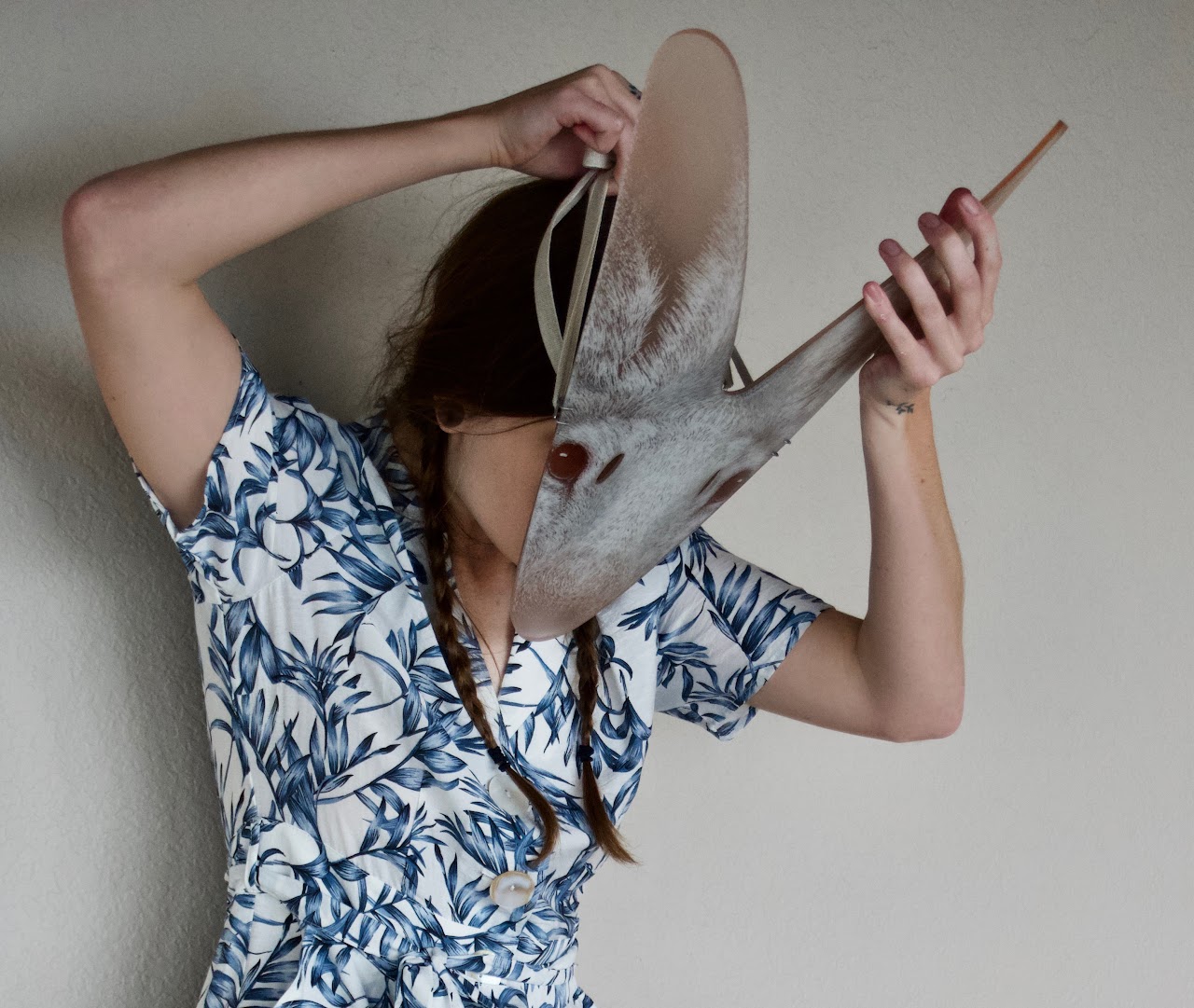
When asked if that gray space extends to her experience of gender, Suzanne nods without hesitation. “I come from a very macho family. And in places like the drag strip or even the glassblowing community (not so much now, but definitely then), you were either sexualized for being surprisingly good at male things, or you were gay. So for a while I buried my femininity because I thought that was the only way to gain respect. And it’s taken me a while to find it again.”
After over a decade living largely out of her van—teaching workshops and tackling freelance fabrication gigs—Suzanne has landed in Brooklyn. “A lot of artists make work when they’re younger and move into teaching as they age. I’m doing the reverse. I taught a ton in my 20s. Now it feels like I’m entering the chapter where I want to focus on my life’s work.”
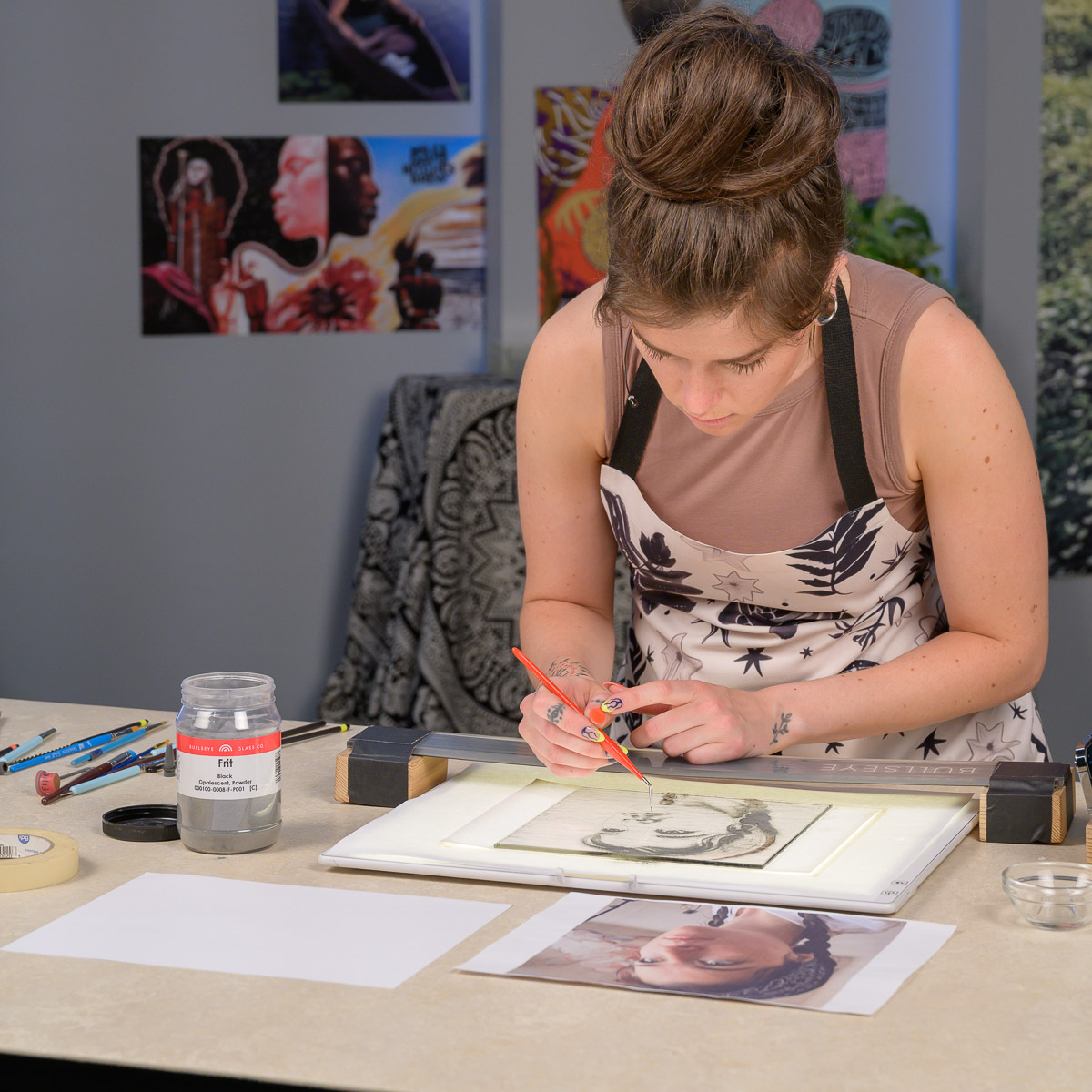
Suzanne’s process and techniques—once kept close—are about to be shared in her first video class, Drawn to Glass, filmed at Bullseye. “I’ve held onto this process for a while,” she admits. “I wanted it to be mine. But now? I want as many people as are interested to learn it. Being here at the Factory and having Bullseye’s help is huge. I’m really thankful. And I’m confident this class will help spark a lot of impressive new work in glass.”
Learn more about Suzanne on her website and follow her on Instagram at @suzanne_head. You can also learn her techniques in the live online class Drawn to Glass with Suzanne Head, available through Bullseye.
Many of the images above courtesy of Suzanne Head / suzannehead.com