Overview

Striker
This style may not reveal (strike to) its target color until fired.
Reactive Potential
Contains: Lead (Pb)
May React With: Selenium (Se) / Sulfur (S)
Forms of Glass
Billet (-0065)
Detailed Information
About 000843 Billet
Working Notes
PRODUCT USE
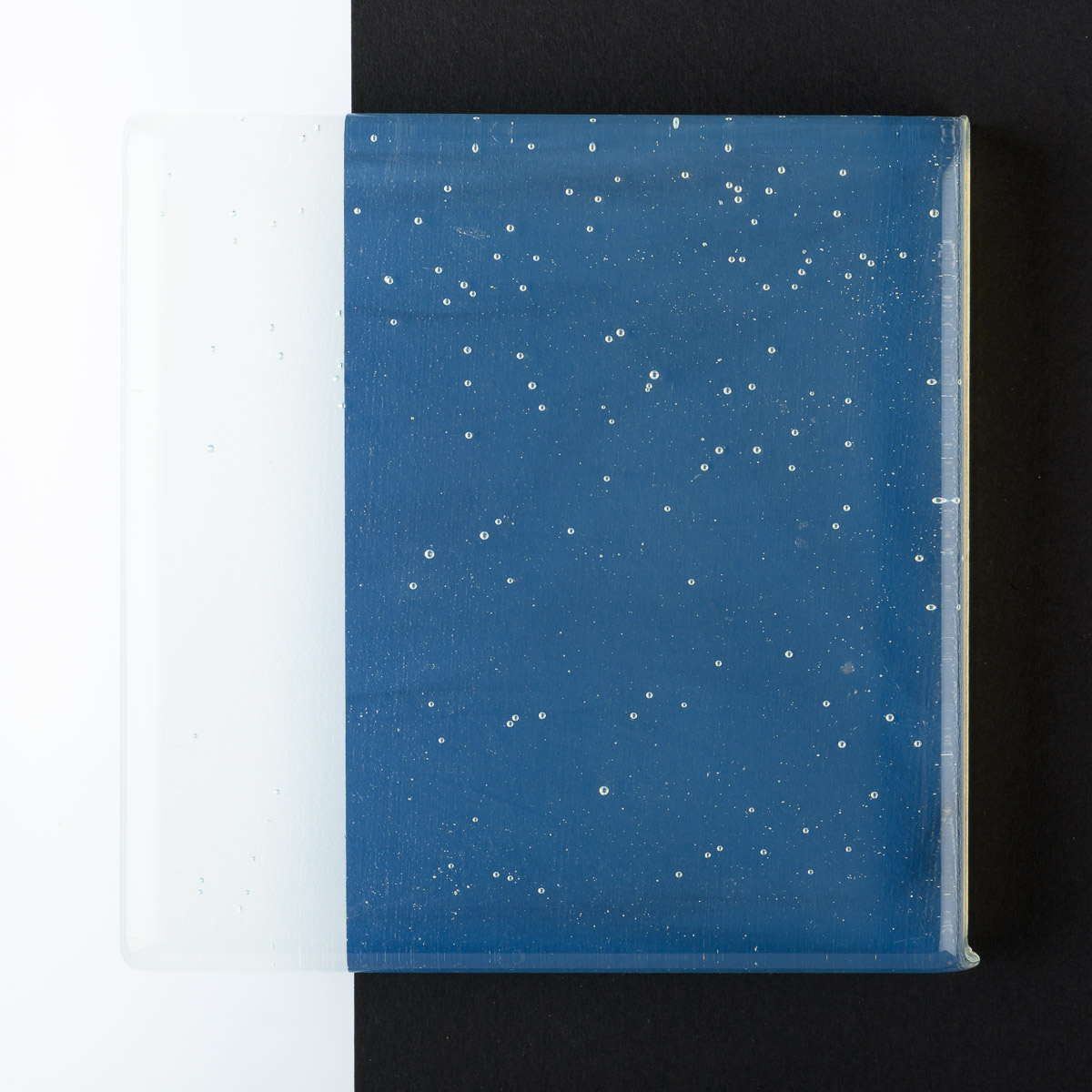
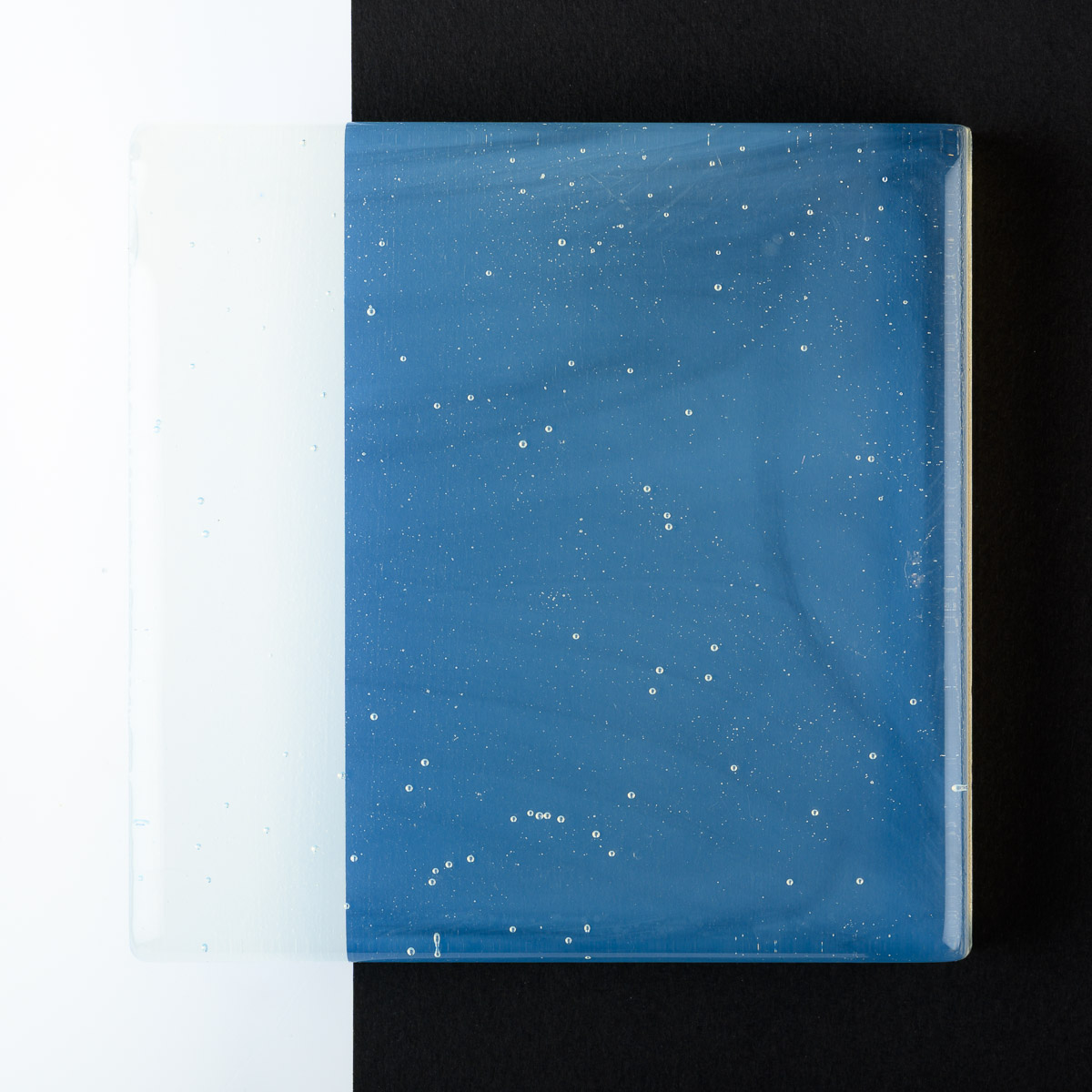
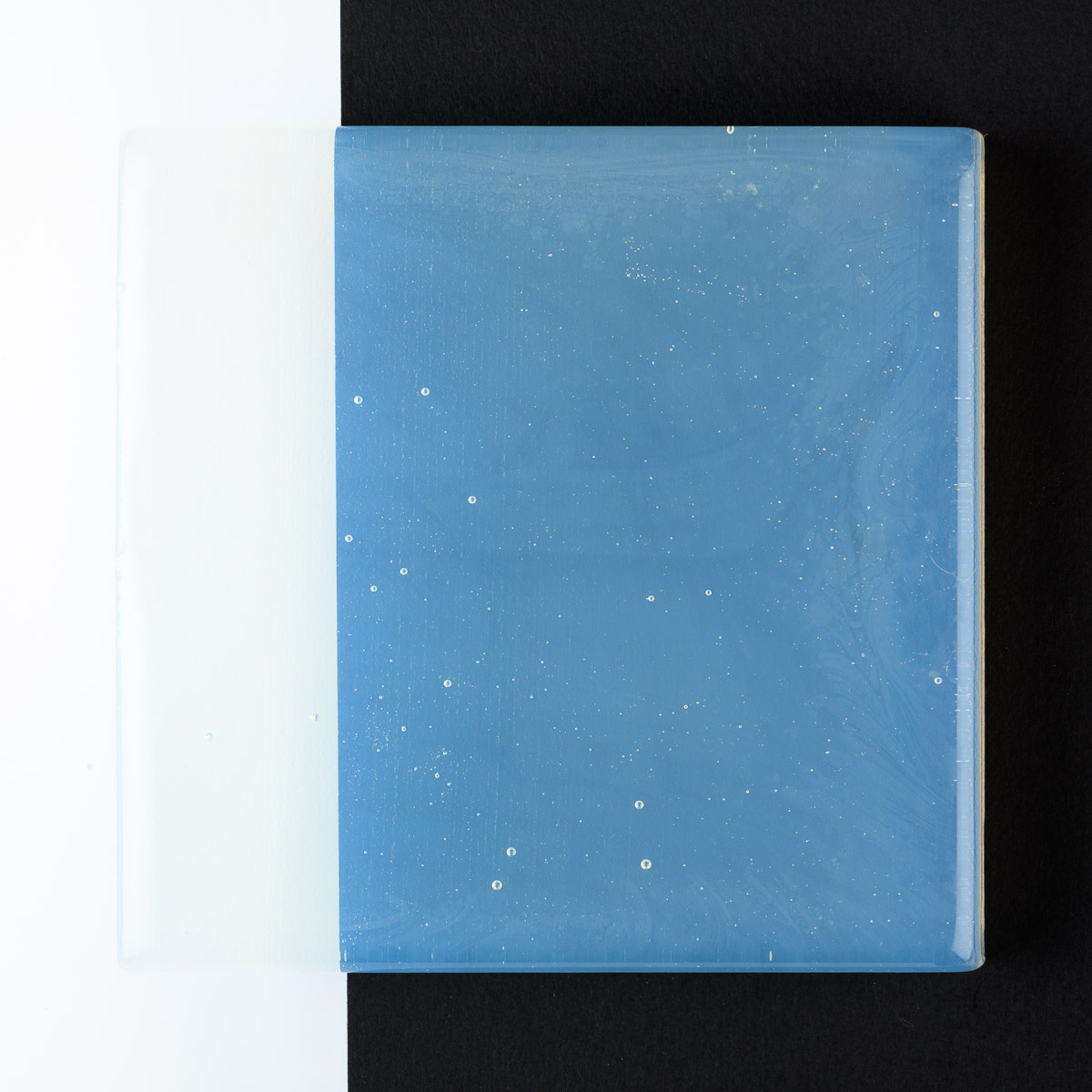
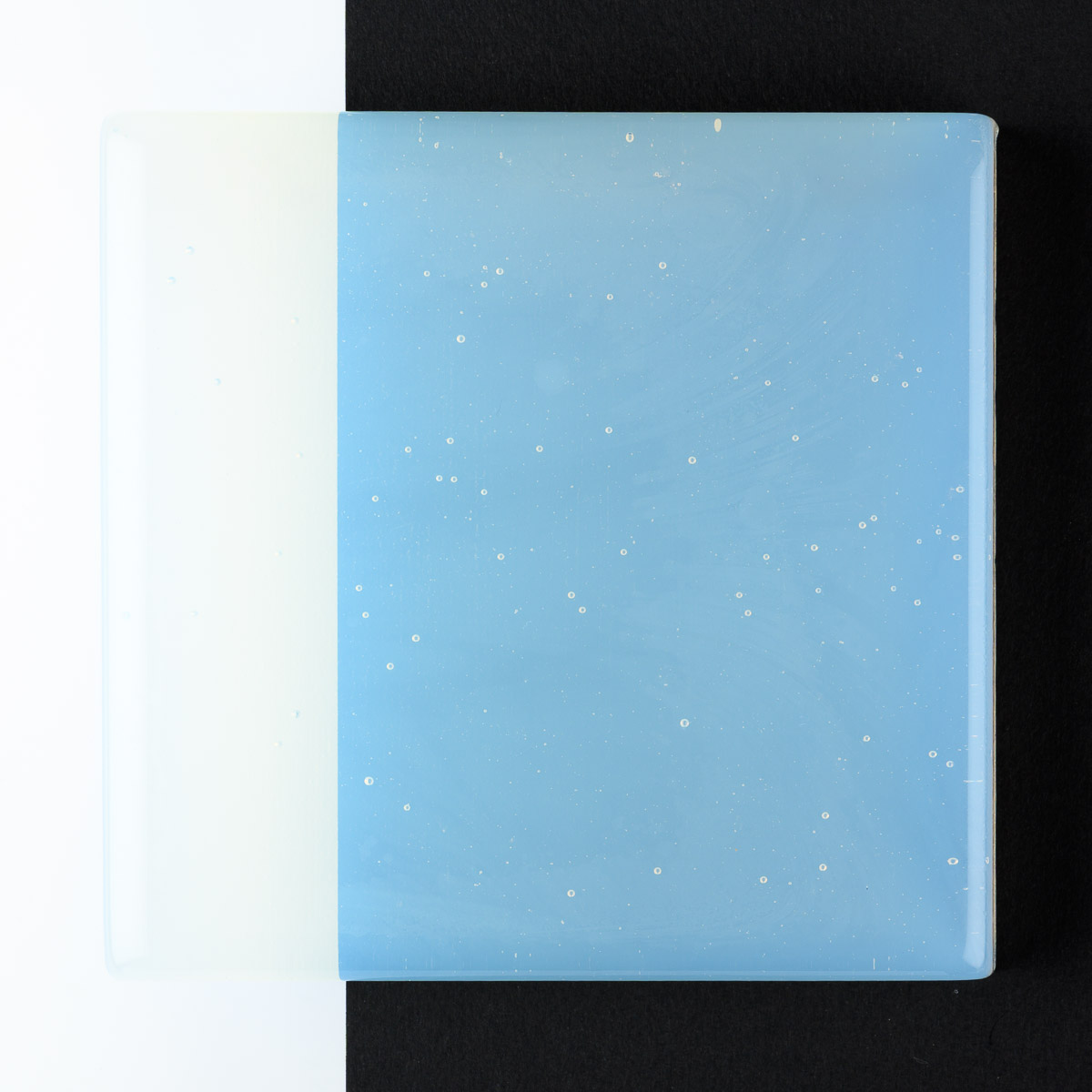
0843 Opaline Casting Tint Billet
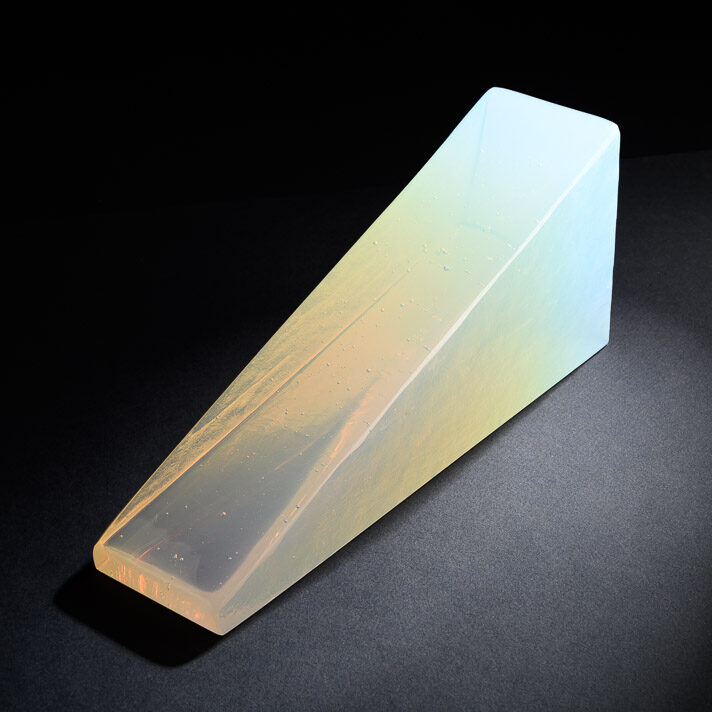
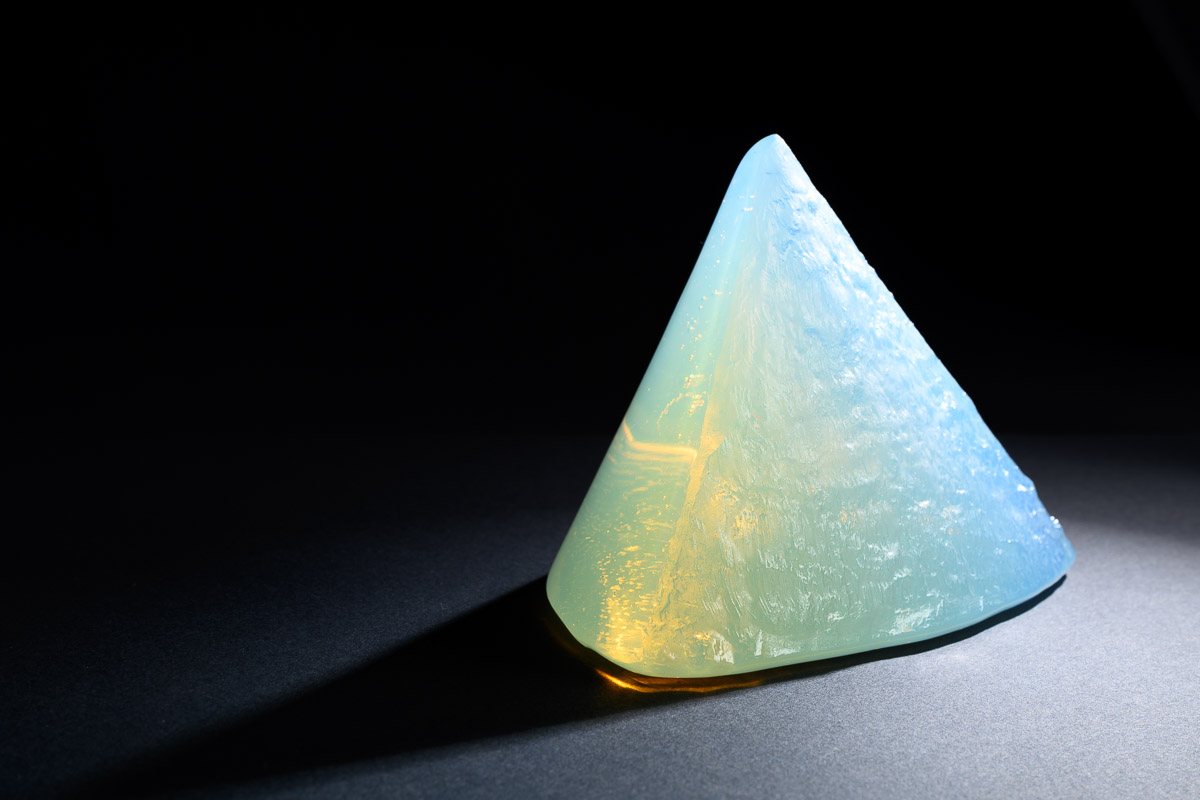
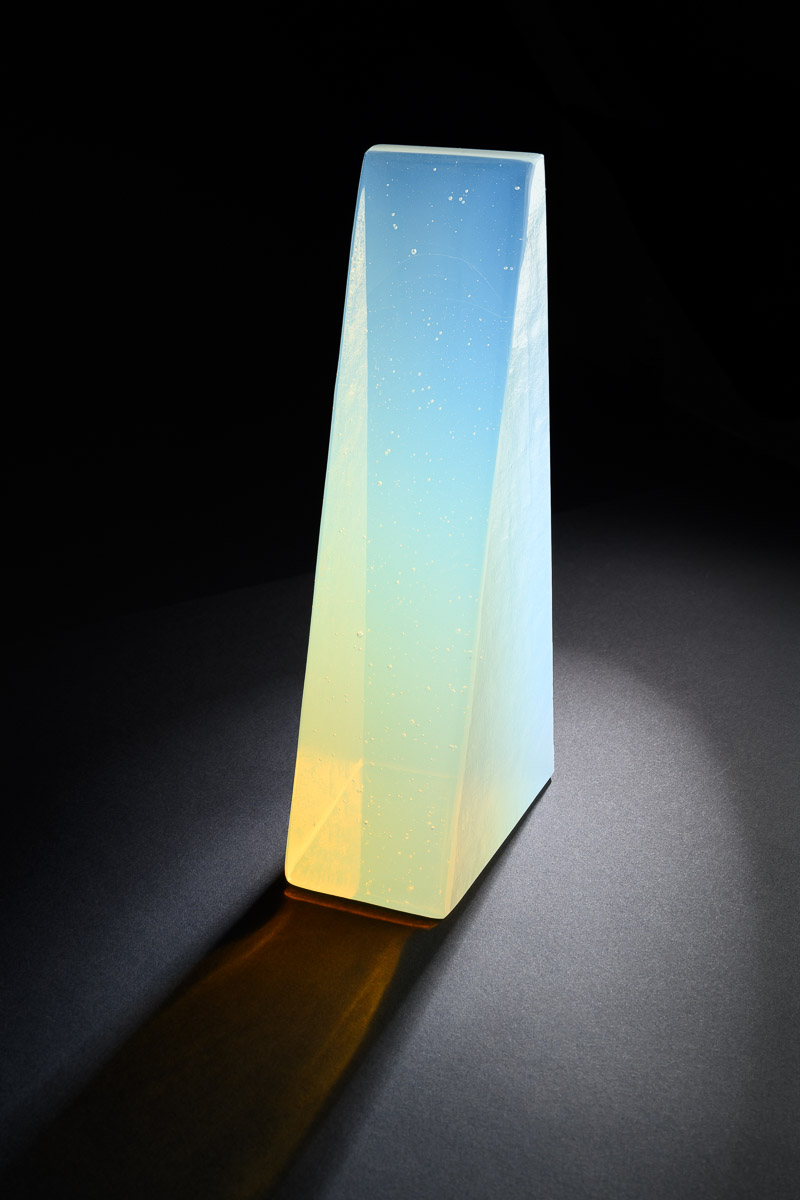
Opaline Casting Tint Billet (000843-0065-F) only reveals its rich and varied color range through a unique firing process. When viewed at process temperature during the casting firing, Opaline Casting Tint will appear colorless and clear. If allowed to cool and anneal as you would other styles, it will remain colorless. To develop Opaline Casting Tint’s unique color during a single casting firing, the following striking process must be followed:
Striking Instructions
- Cast the glass and perform any anti-sucker* holds needed, then cool to 1000 °F (538 °C), and hold it there for at least 1:00 to unify the temperature throughout the glass. If casting a form that is thicker than 1˝, hold for at least 1 hour per inch of thickness. The thicker the glass, the longer it will need to be held at 1000 °F (538 °C) to unify the temperature.
- Next, reheat to 1225 °F (663 °C) to develop color. The saturation of color and degree of opalescence that develop depend on how long the glass is held at this temperature, and it can be held for quite a long time without becoming oversaturated. The rate of reheating to 1225 °F (663 °C) does not seem to affect the strike. Use a rate that is appropriate for your project.
- After your strike hold is complete, allow the kiln to cool at its natural rate to 900 °F (482 °C) and begin your annealing cycle.
We recommend visually confirming that color is developing during the hold at 1225 °F (663 °C). If you do not see color developing, cool back down to 1000 °F (538 °C) and hold it there for at least 4:00 before reheating to the striking range again.
Using this procedure gives you the ability to control the saturation and opalescence of cast work. Interestingly, the glass did not do anything when reheated to 1100 °F (593 °C) or 1325 °F (718 °C) instead of 1225 °F (663 °C), so the temperature range in which color strikes appears to be very narrow. If the glass is reheated to casting temperatures, it will become clear once again. If after firing it becomes necessary or desirable to re-fire the piece to casting temperature, you will need to re-strike the glass following the guidelines above.
Also of note: This glass is a little heavier than our typical glasses with a specific gravity of 2.57 g/cm3 (0.093 lb/in3).
*If your typical casting process includes a hold at 1225 °F (663 °C), when cooling from process temperature to reduce the probability of “suckers,” you should still do this hold. In our tests, the glass did not develop any color/opalescence when held at this temperature upon cooling from the casting temperature. It will only develop color if first cooled to 1000 °F (538 °C), and then reheated as described above. We have not found it necessary to repeat the slower rate of cooling used to reduce suckers after your strike hold when cooling to anneal. For additional information about suckers, see Tip Sheet 8: Lost Wax Kilncasting.