Overview
Reactive Potential
Non-reactive. Neutral.
Forms of Glass
Sheet Glass (-0030, -0050), Frit (-0001, -0002, -0003, -0008) and Stringer (-0107, -0272)
Detailed Information
About 001140 Sheet Glass
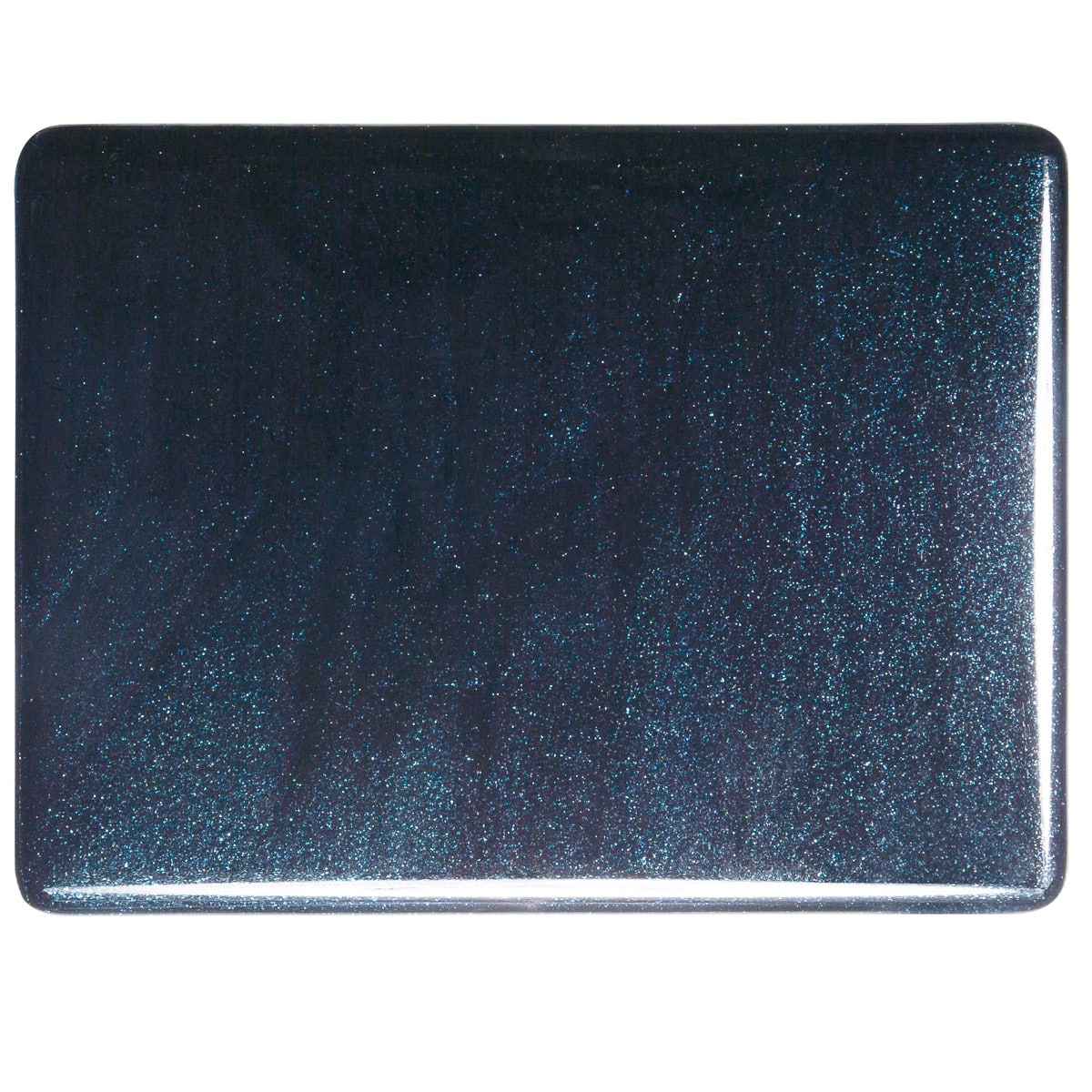
Cold Characteristics
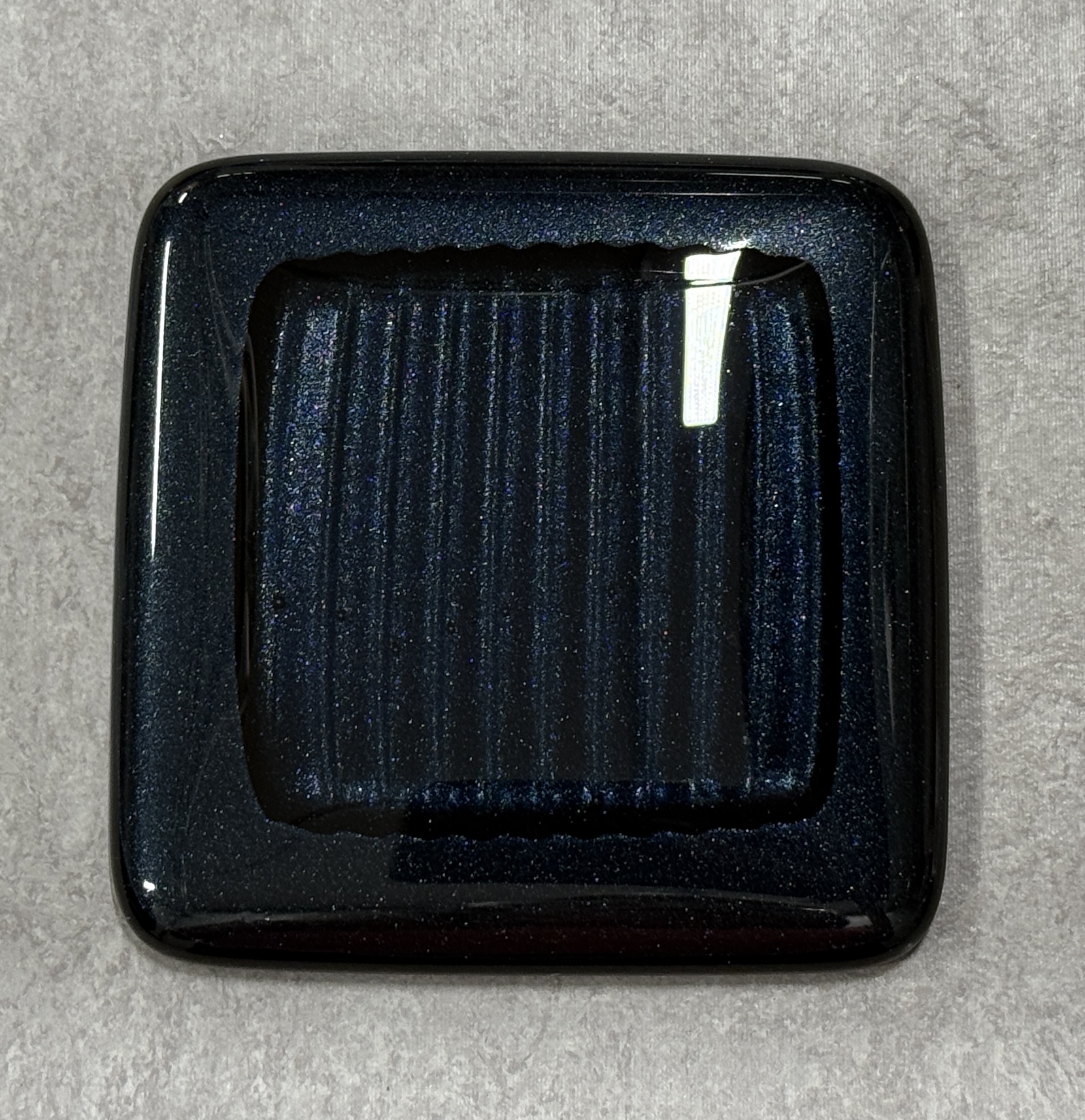
Cold sheet has grainy, sandy surface texture. This style is categorized as a Transparent glass, though little to no light is transmitted through the 3mm sheet.
Working Notes
Stable, no color shift. Softens more than most glasses at fusing temperature. This style is categorized as a Transparent glass, though little to no light is transmitted through the 3mm sheet.
Fusible / Bullseye-compatible.
Tiny metallic sparkles, also referred to as spangles, concentrate at the outer surfaces of the sheet glass in the factory-production forming process, including around the rolled edge. The core of the sheet is not metallic.
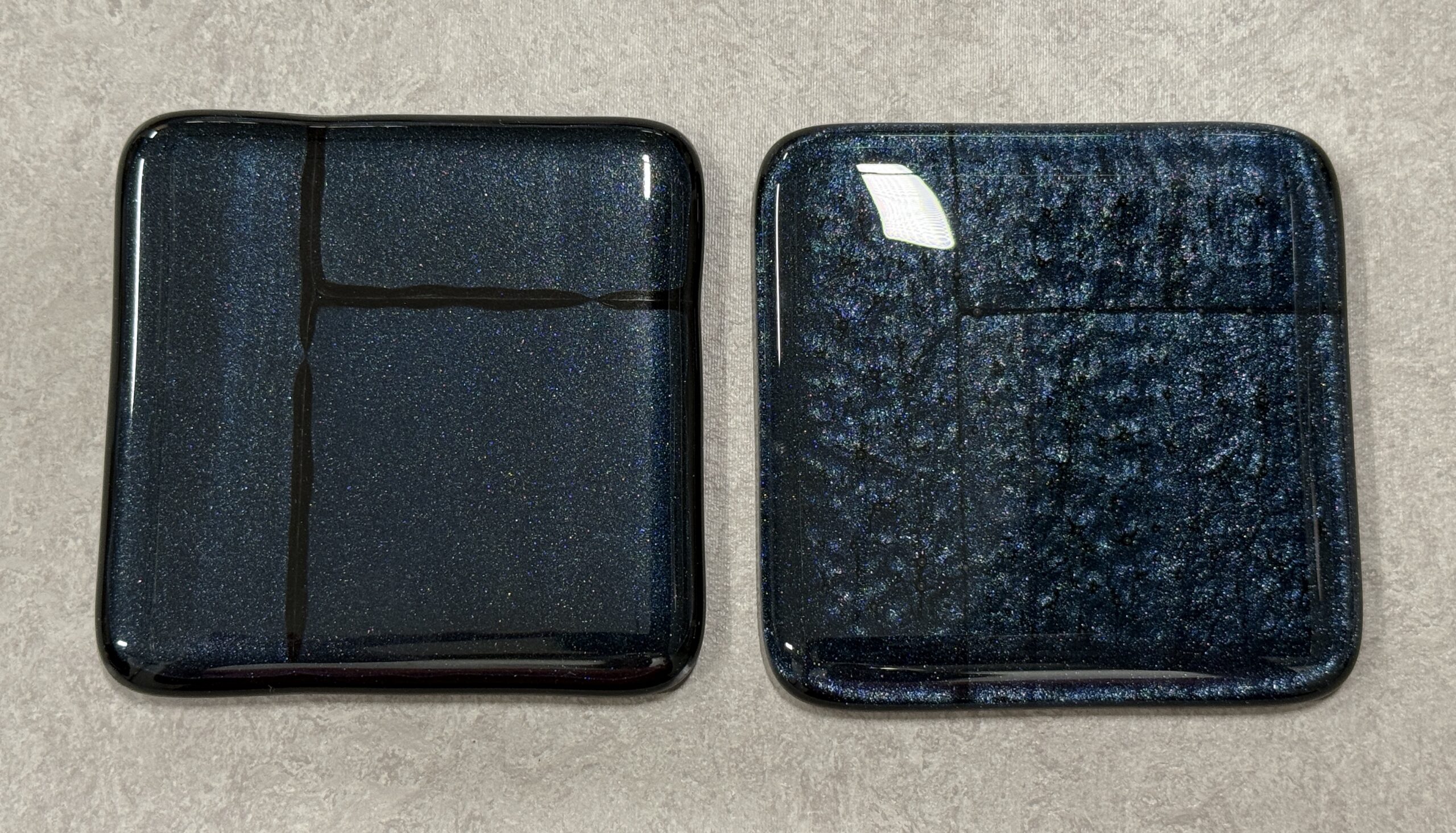
Design opportunities and characteristics:
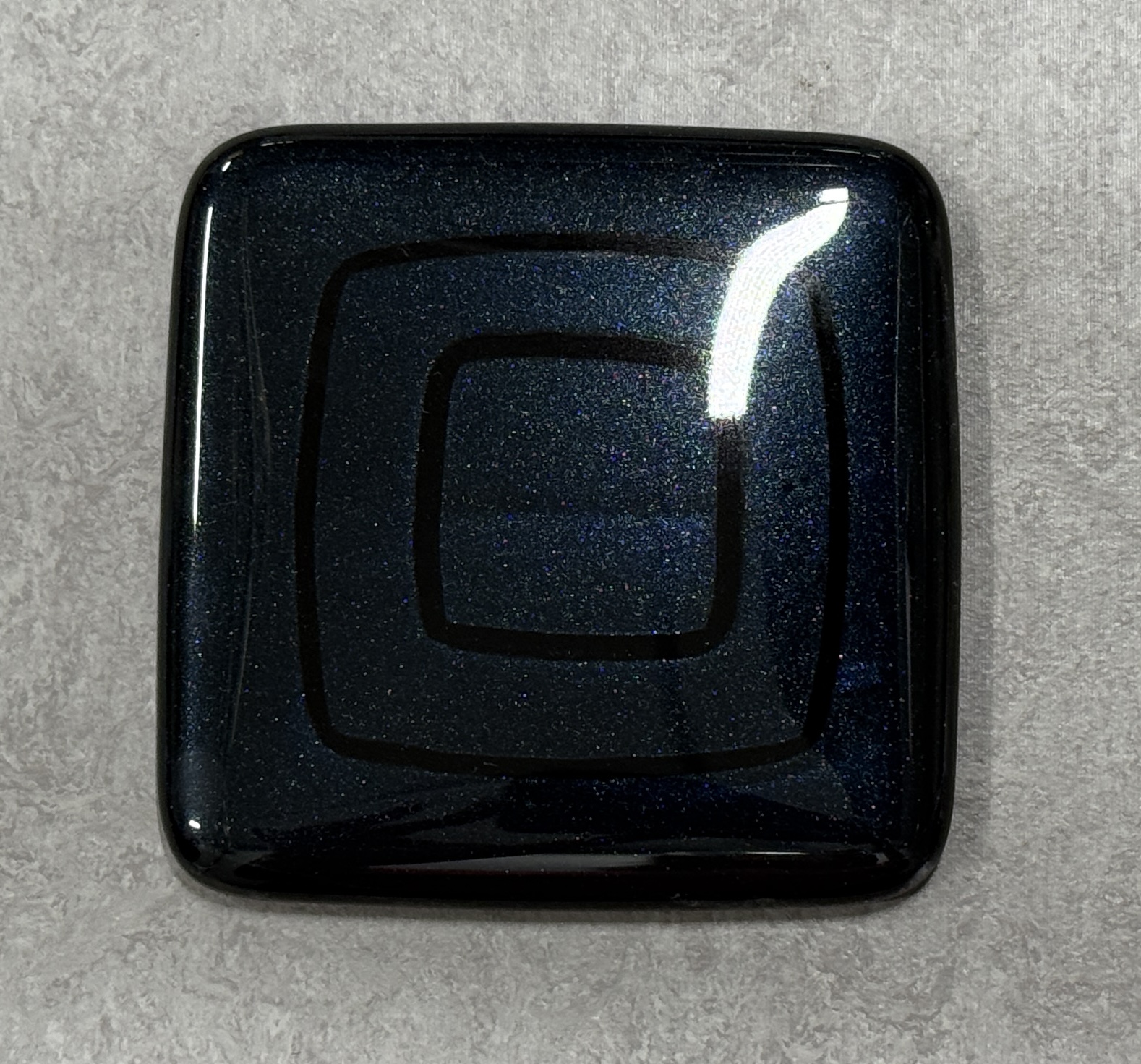
- When fired to a full fuse, cut sheet glass elements used on the surface of a project fire with a solid, not sparkly border.
- Explore displacement effects with the use of various clear or transparent glasses on the top surface to distort the surface.
- Edge construction techniques typically result in an inhomogeneous sparkled result because the core of the sheet is not metallic.
About 001140 Frit
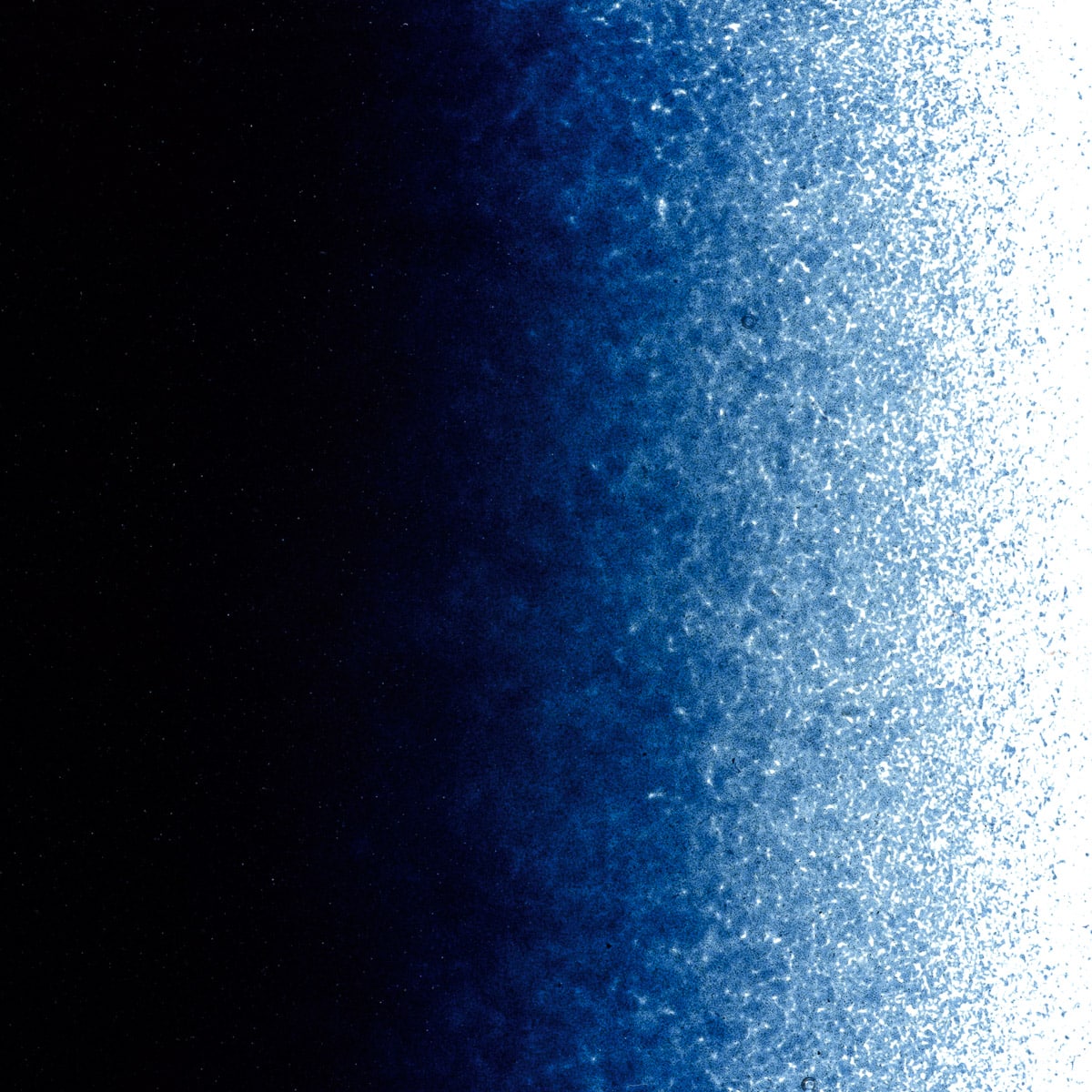
Working Notes
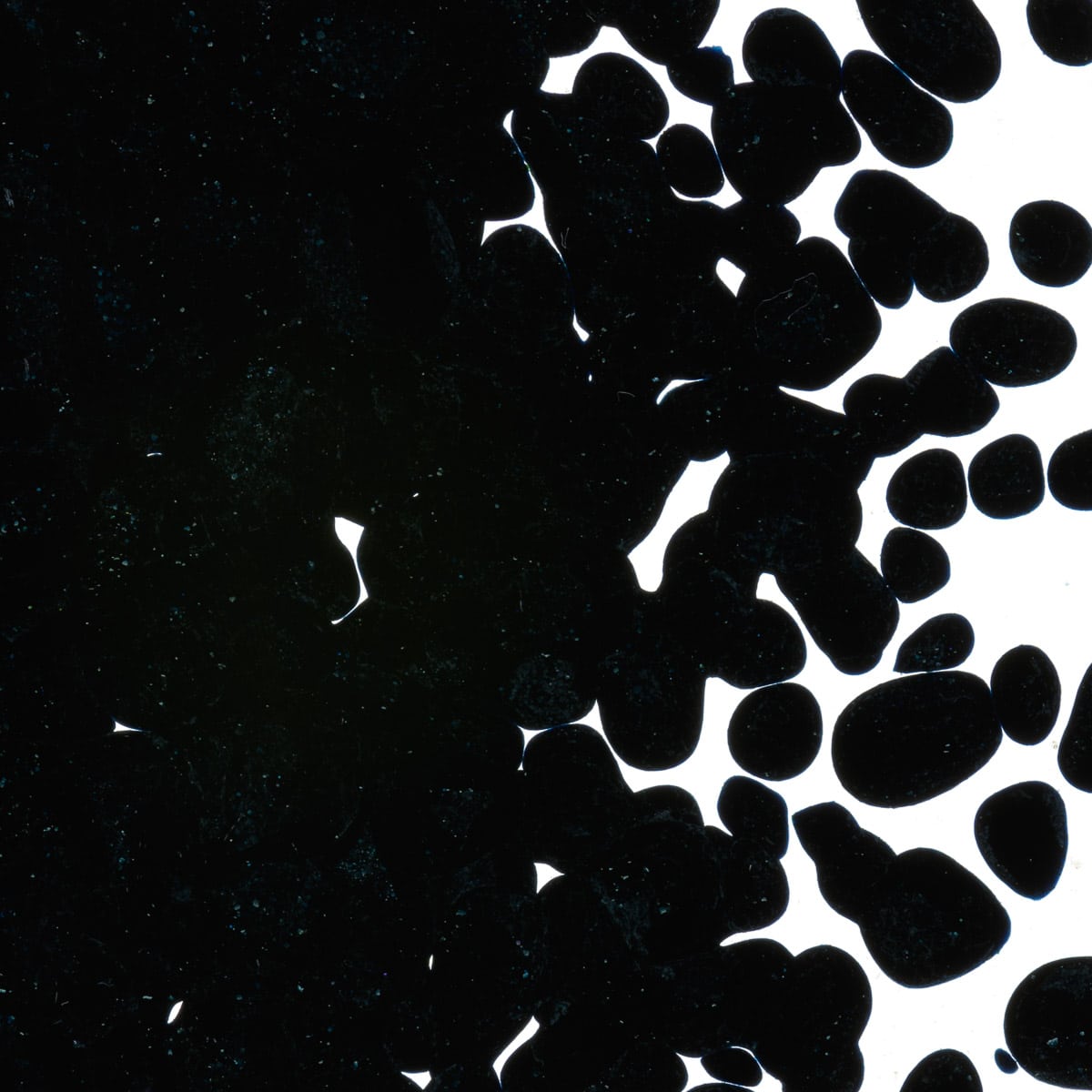
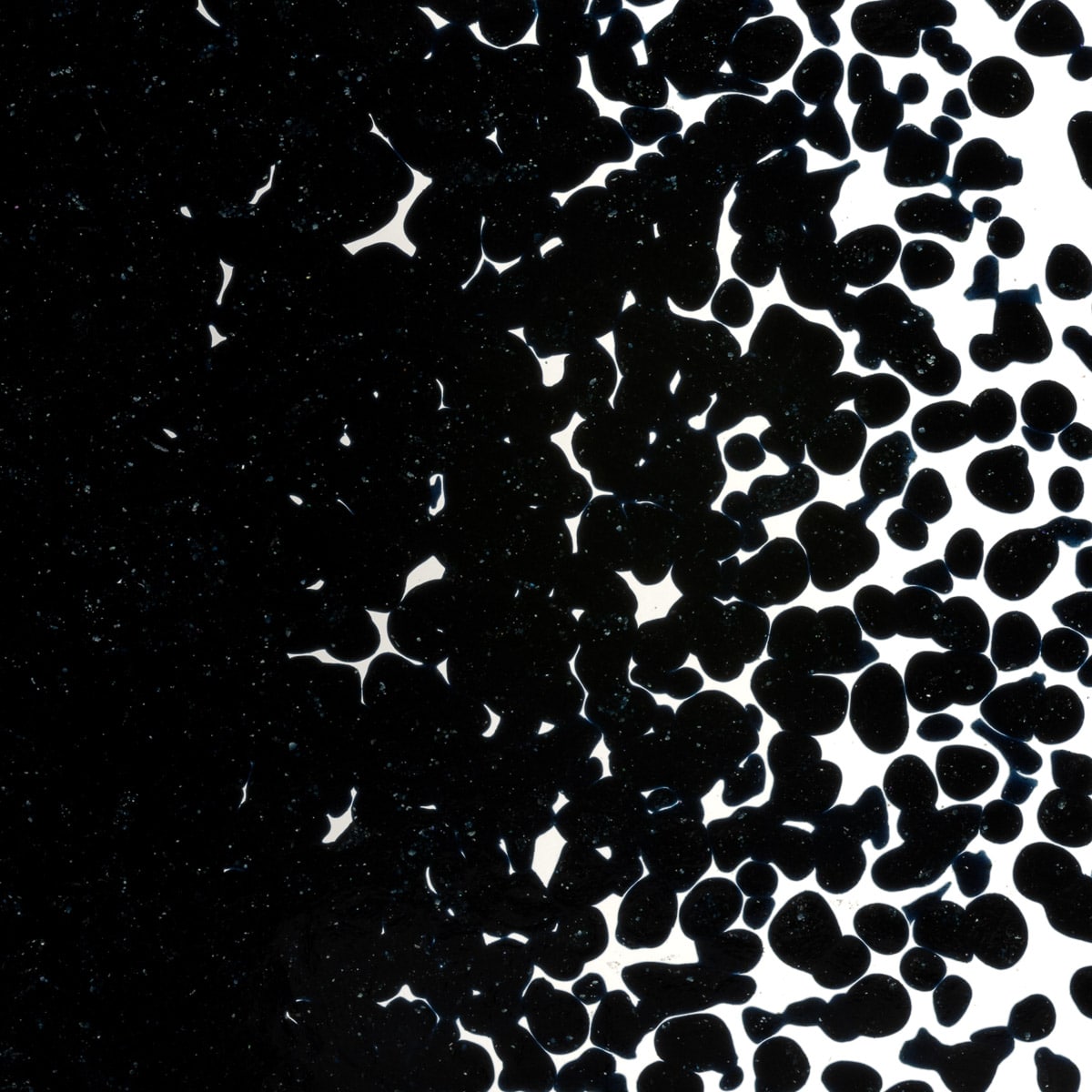
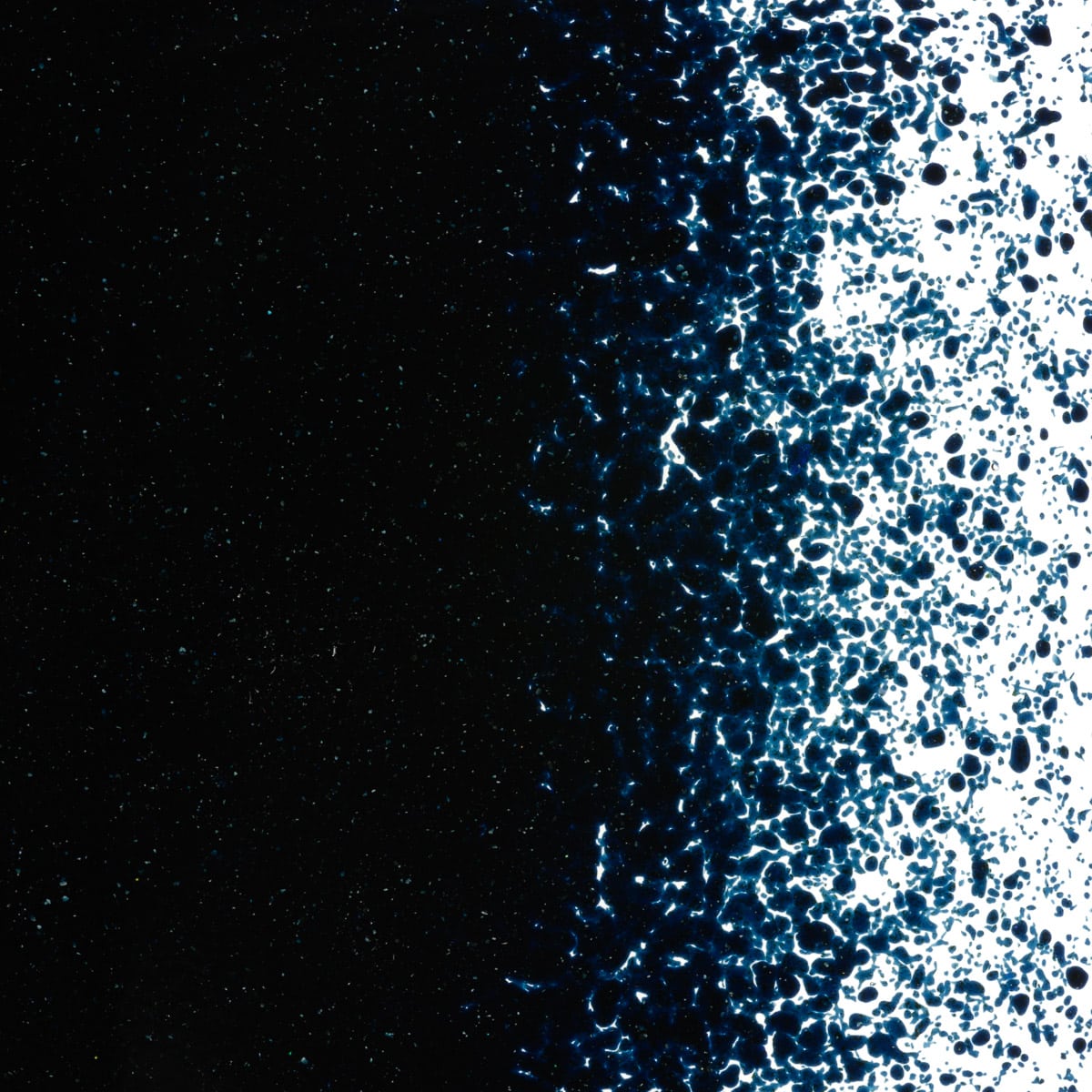
See sheet glass notes for this style.
See Quick Tip: Inky Blue Brush Strokes
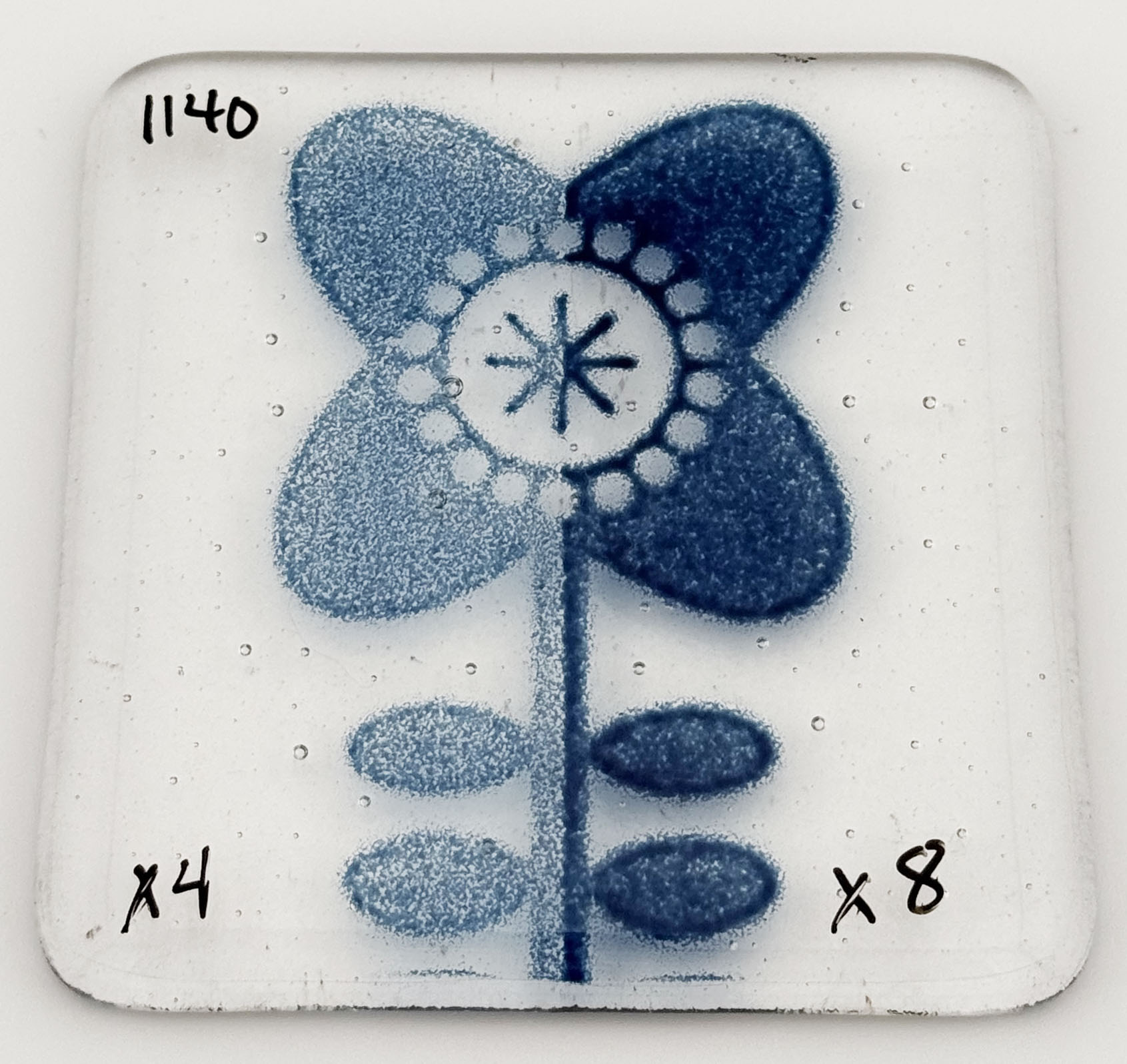
Aventurine Blue is a strong color and holds up well when used in the small amounts needed when powder printing. For more information about Powder Printing Techniques see the video Powder Printing.
About 001140 Stringer
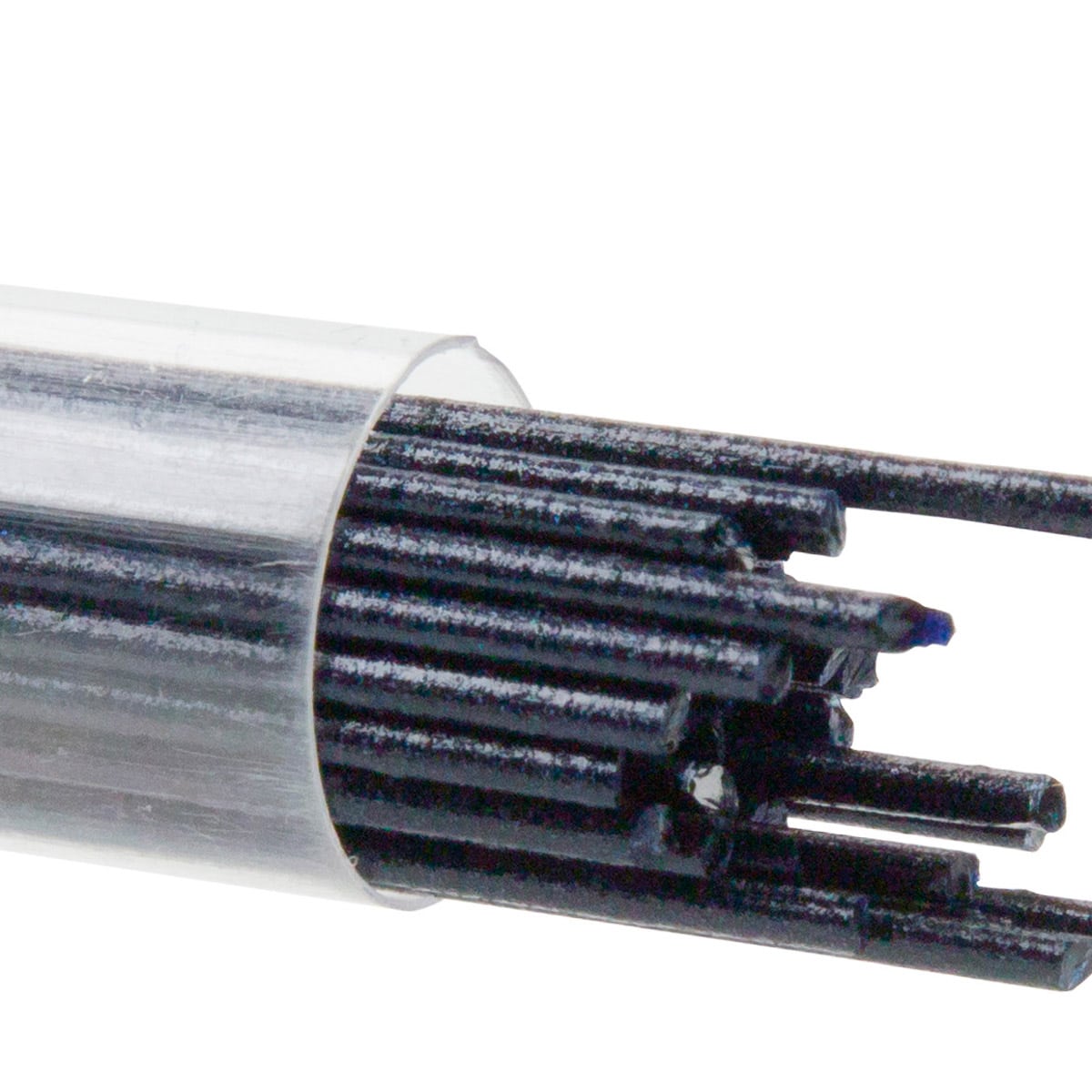
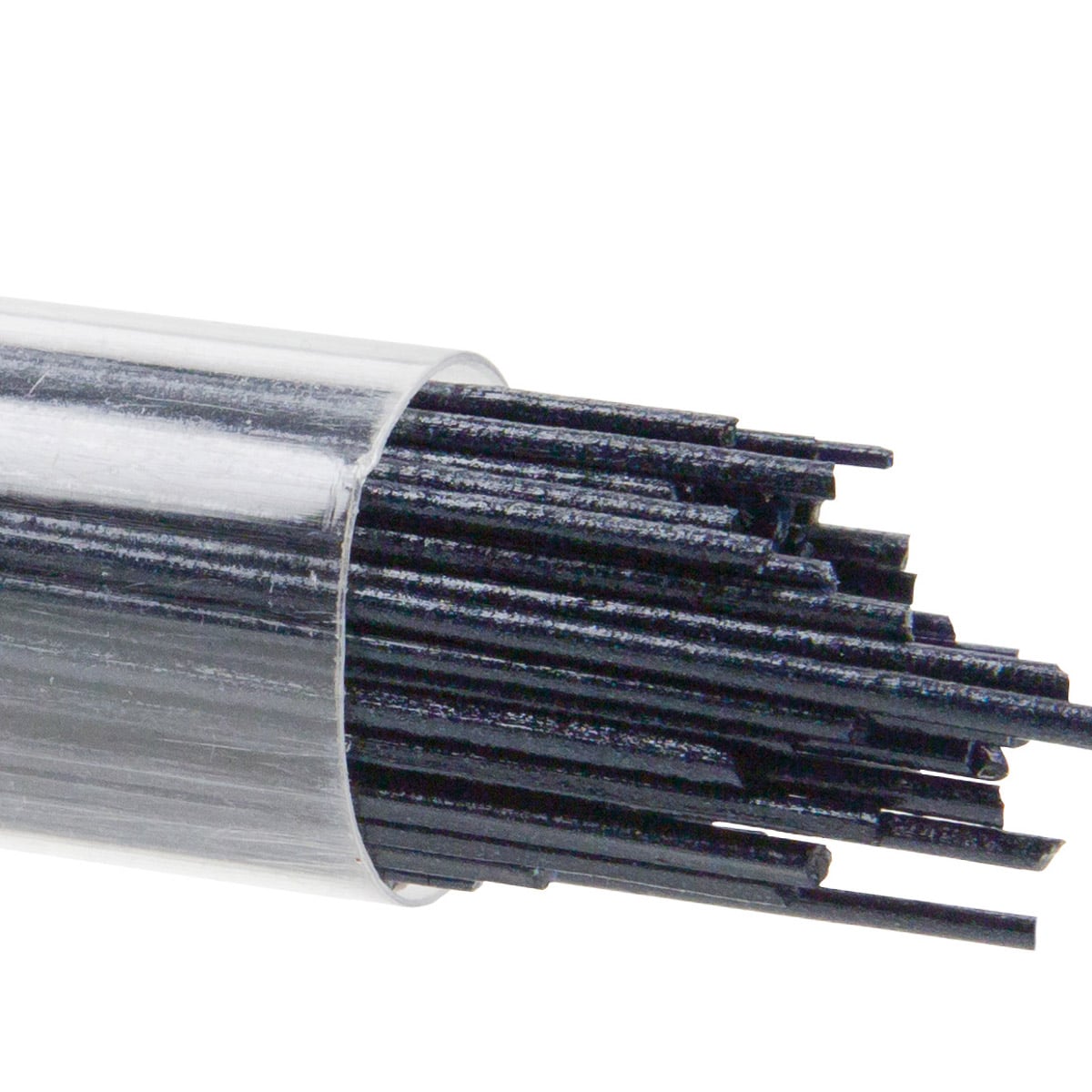
Working Notes
See sheet glass notes for this style.